
Facilities Are Not a Line Item. They Are the Strategy.
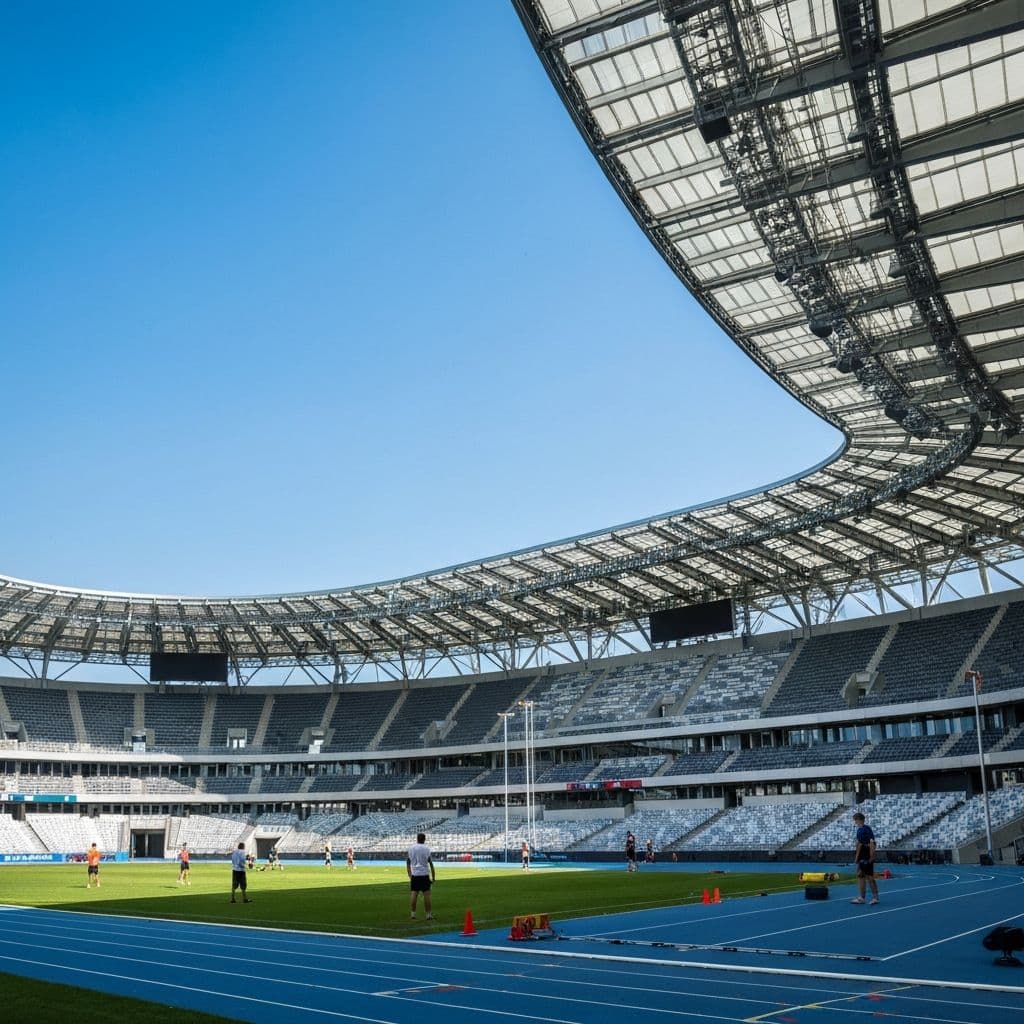
When an athletic director walks a recruit through a training facility, the building is making an argument no brochure can: this program invests in its athletes. When alumni return for a game, the stadium is the physical face of the institution's trajectory. When the campus master plan is presented to a governing board, athletic facilities are among the few buildings that donors, students, legislators, and the surrounding community all have opinions about.
This is why athletic facility investment is institutional strategy, not deferred maintenance with better branding. For colleges and universities, facilities operate simultaneously on three registers: recruiting, where the visible quality of training, competition, and athlete-support spaces directly shapes which student-athletes and coaches choose the program; revenue, where seating, premium spaces, event capability, and rentable venues drive earned income; and identity, where athletic venues anchor campus life and alumni connection in ways few academic buildings can.
The difficulty is that these three registers rarely point at the same project. Recruiting logic argues for the locker room and training complex. Revenue logic argues for premium seating and hospitality. Identity logic argues for the stadium renovation everyone will see. Every program has more credible facility needs than capital, and the departments that navigate this well are not the ones with the biggest wish lists — they are the ones with a disciplined way of choosing.
Prioritizing Among Needs That All Sound Essential
Facility priorities inside an athletic department are contested by nature. Every head coach can make a sincere case that their sport's facility gap is costing recruits. The development office has donor conversations attached to particular buildings. Facilities staff hold a deferred-maintenance list that predates everyone else's ambitions. Without a structured prioritization framework, the sequence gets set by whoever argues loudest or whichever donor commits first — and the resulting portfolio serves the accidents of advocacy rather than the strategy of the department.
A workable framework evaluates each candidate investment against a consistent set of questions:
- Strategic contribution. Which departmental goals does this project actually advance — competitive success in priority sports, recruiting position, revenue growth, athlete welfare, compliance — and how directly?
- Condition urgency. Is there a life-safety, code, or system-failure clock running on this facility that removes discretion from the timing?
- Revenue consequence. Does the project create or protect earned income, and on what timeline does that return arrive?
- Fundability. Is there a realistic donor, naming, or funding pathway attached to this project specifically — and does chasing that pathway distort the sequence?
- Operating burden. What does the building cost to run, staff, and maintain every year after it opens?
That last question deserves emphasis because it is the one most often skipped. Donor-funded construction with no endowment for operations is a gift that arrives with a permanent invoice attached. A department that accepts three such gifts in a decade has quietly committed a meaningful share of its future operating budget before a single scholarship or salary decision is made. Prioritization is not only about which buildings to build; it is about which permanent obligations to accept.
Sequencing: The Capital Plan Beats the Project List
A prioritized list is still not a plan. The distinctive work of athletic capital planning is sequencing — arranging investments over a multi-year horizon so that each project strengthens the position for the next.
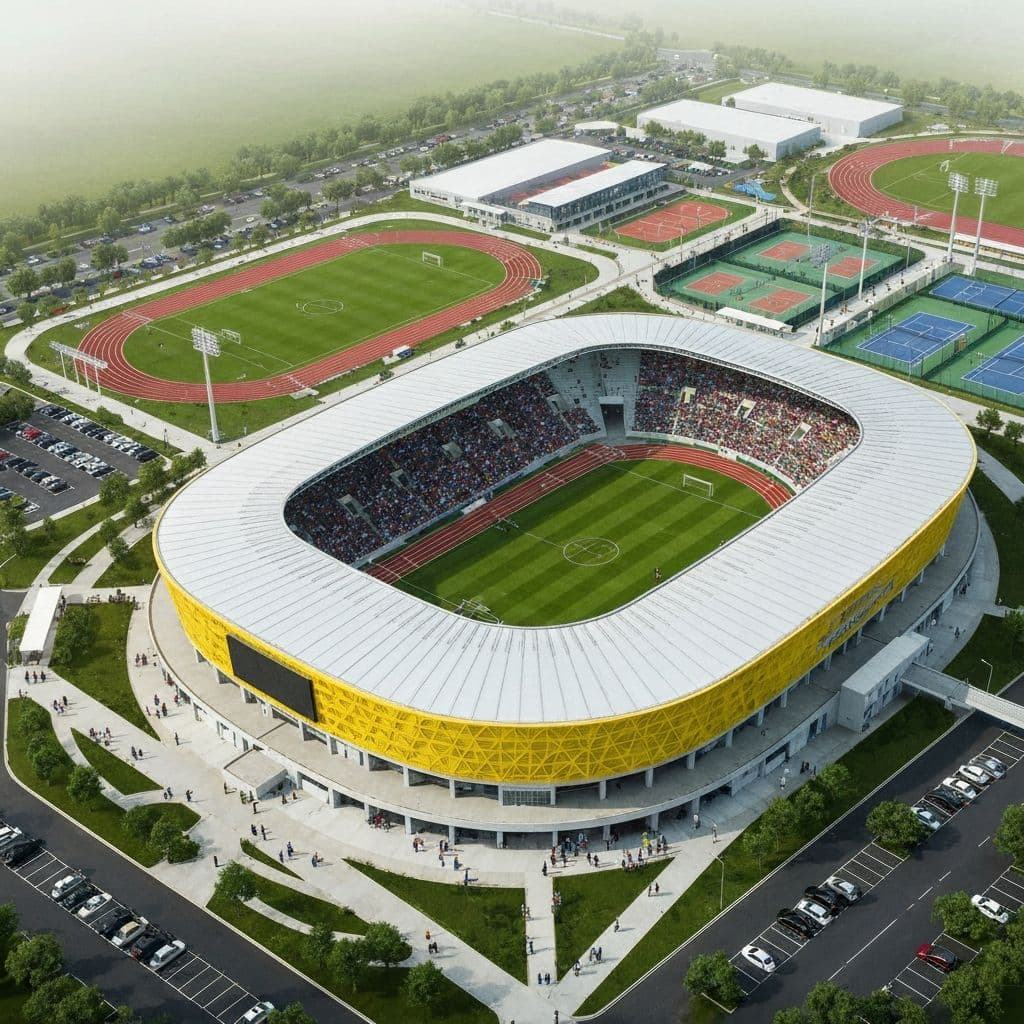
Good sequencing exploits dependencies. Infrastructure that serves multiple future projects — utilities, parking, site circulation — belongs early, so later projects do not each pay for it separately. Enabling moves come before the projects they enable: the practice facility that frees the arena for renovation, the storage building that clears the site. Revenue-generating projects placed early can produce income that services debt or funds later phases, and visible early wins build the donor and board confidence that funds the more ambitious middle of the plan.
Good sequencing also respects the calendar. Athletic construction lives inside competition seasons, and each project's construction window must be planned against the sports it displaces. A sequence that looks efficient on paper but requires a team to play two seasons in a compromised venue has costs — competitive, recruiting, and reputational — that never appear in the construction budget. Collegiate venues are renewed in the gaps the season allows, and the capital plan has to be built around those gaps rather than in ignorance of them.
Finally, good sequencing stays coherent under change. Donor timing shifts, conference landscapes move, and priorities evolve. A capital plan should be a rolling document — commonly a ten-year horizon, refreshed annually — with the discipline to re-sequence deliberately when circumstances change rather than abandoning the plan at the first disruption. This is the core of strategic planning and advisory work with institutional owners: not producing a binder, but installing a decision process that survives contact with reality.
Aligning Ambition with Funding and Operating Capacity
Athletic facility funding is a patchwork by nature: philanthropy, institutional debt, student fees where applicable, premium-seating and naming revenue, conference distributions, and occasionally public participation. Each source arrives with its own timing, restrictions, and expectations, and assembling them into a reliable funding plan for a multi-year program is a financial engineering exercise in its own right.
Two failure patterns recur. The first is planning to the headline gift: a lead donor commits a transformational number, the project is scoped to the full vision, and the remaining fundraising underperforms — leaving the institution to choose between value-engineering a compromised building or backfilling with debt it had not planned to carry. The discipline is to scope the base project to committed and high-confidence funds, and structure the vision as additive packages that attach as money actually lands. The second is escalation denial: multi-year programs budgeted at current costs are underfunded by construction inflation before the later phases begin. Realistic escalation assumptions, early procurement of long-lead commitments, and contingency sized to the program's actual risk are the unglamorous mechanics that keep year-six projects fundable. This is where procurement and financial management discipline earns its place in the planning room, not just the construction trailer.
Operating capacity is the parallel constraint. Every new square foot carries permanent staffing, utilities, maintenance, and eventual renewal costs. A capital plan should carry an operating pro forma alongside the construction budget, and a department should be able to state, before any groundbreaking, how the portfolio it is building will be maintained competition-ready for decades — because a recruiting asset that ages into visible neglect becomes a recruiting liability with the same square footage.
What Recruits Actually See
It is worth ending where the argument began. Facilities recruit not because they are new, but because they communicate seriousness — a program that plans, invests, and maintains. A sequenced portfolio of well-kept, well-chosen facilities communicates that more convincingly than one spectacular building surrounded by deferred maintenance. The departments that win the facilities dimension of recruiting over a decade are the ones whose capital plans are boringly disciplined: prioritized against strategy, sequenced against dependencies and seasons, funded against realistic assumptions, and operated as carefully as they were built.
For athletic departments and their institutions beginning this work — or holding a list of competing projects with no agreed sequence — the most valuable step is a structured planning engagement before any single project gains momentum. Independent, owner-side strategic planning advisory gives the department a defensible framework for the decisions donors, coaches, and boards will all contest, and a capital plan that turns facility ambition into institutional advantage rather than institutional exposure.