Athletic Facilities Wear Out Faster Than Owners Expect
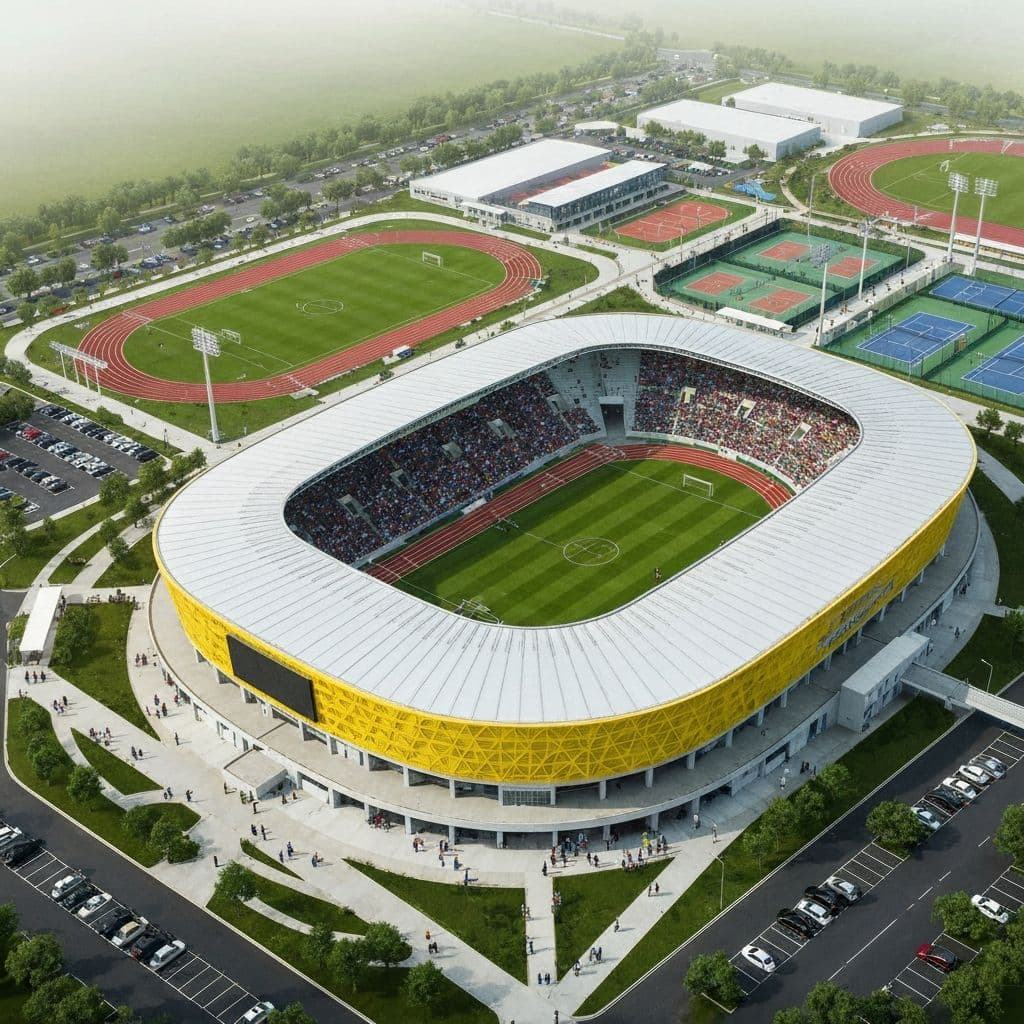
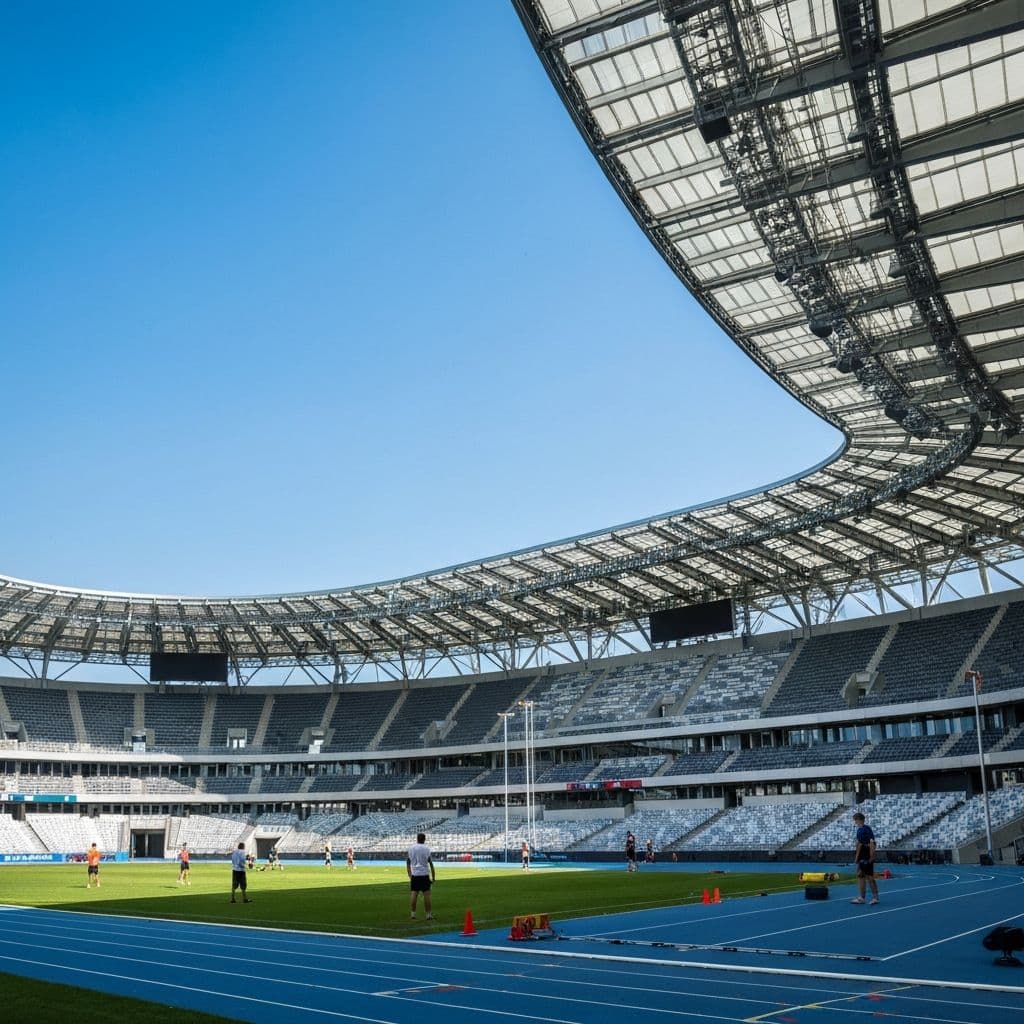
Few building types absorb punishment the way athletic facilities do. Playing surfaces take thousands of hours of practice and competition. Locker rooms and training spaces cycle through hundreds of athletes daily. Mechanical systems run hard to condition large volumes, manage humidity in natatoriums and ice sheets, and ventilate spaces at full occupancy. Life-safety systems — egress lighting, fire alarms, public address, emergency power — must perform flawlessly in buildings that regularly hold thousands of people.
The result is a maintenance burden that outpaces most other institutional buildings. A recreation center or stadium that looks new at ribbon-cutting can look tired within five years and become a competitive liability within ten. For colleges and universities, where athletic facilities carry recruiting weight far beyond their square footage, that decline shows up in ways the maintenance budget never captures: recruits notice worn surfaces, coaches lose confidence in the building, and events migrate to better-kept venues.
The owners who avoid this trajectory are not the ones with the largest budgets. They are the ones who treat facility operations as a planned discipline rather than a reactive function — and who plan that discipline around the one constraint every athletic facility shares: the season calendar.
The Season Calendar Is the Operations Calendar
Athletic facilities cannot be maintained on a generic twelve-month schedule. The competition calendar dictates when systems must perform at their peak, when access is available for invasive work, and when deferred tasks quietly accumulate.
Effective operations planning maps every maintenance activity to the rhythm of the season:
- Pre-season readiness. The weeks before competition begins are when every system that touches competition — playing surfaces, scoreboards, sound, lighting, life safety — must be inspected, tested, and certified ready. Discovering a failed field lighting circuit or an out-of-calibration fire alarm panel during the first home event is an operations failure, not bad luck.
- In-season sustainment. During the season, maintenance shifts to sustainment mode: rapid turnaround between events, close monitoring of high-wear systems, and disciplined restraint on invasive work. In-season work should be limited to what can be completed and verified between events.
- Off-season intensives. The off-season is when the real work happens — surface renovation and replacement, mechanical overhauls, roof repairs, life-safety system testing that requires shutdowns, and the capital renewal projects that cannot coexist with competition. Off-seasons are shorter than they look once camps, rentals, and secondary programming are accounted for, which is why off-season work must be scoped and procured months in advance.
Owners who let the calendar drive the plan get compounding benefits: parts and contractors are lined up before windows open, work is sequenced so trades do not collide, and the facility enters each season verified rather than assumed ready.
Preventive Maintenance Is Cheaper Than Every Alternative
The economics of athletic facility maintenance are unforgiving. Deferring preventive work does not eliminate cost — it converts a scheduled, competitive-bid expense into an unscheduled, premium-priced emergency, and it frequently converts a component repair into a system replacement.
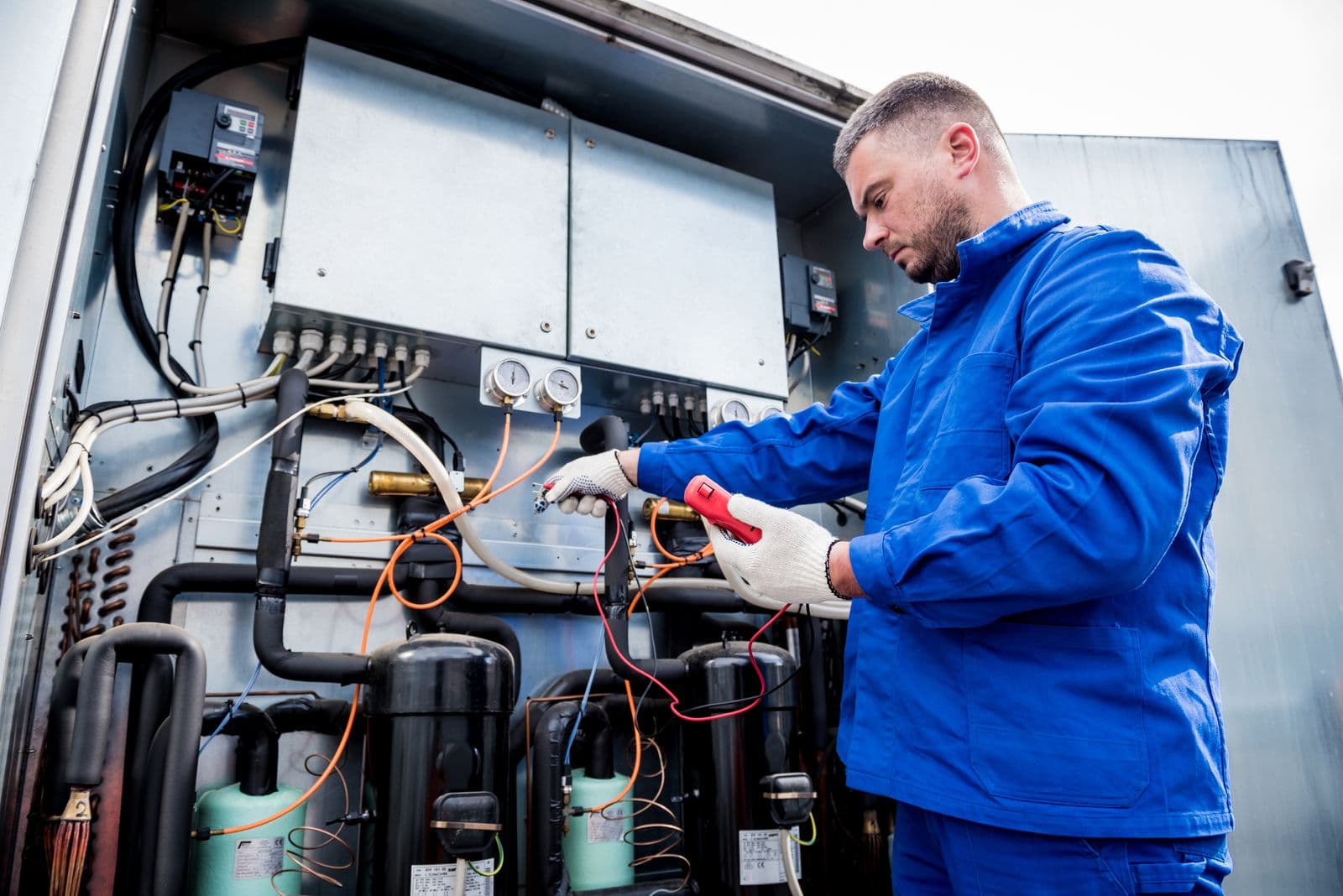
A synthetic turf field that is groomed, decompacted, and tested on schedule reaches its full service life. A neglected one fails early, often creating athlete safety exposure well before the failure is visible. Air-handling units that receive scheduled coil cleaning and bearing service run for decades; units that do not fail at full load — which in an athletic facility means during an event, in front of a full house. Life-safety systems are the starkest case: inspection, testing, and maintenance of fire alarm, sprinkler, emergency lighting, and mass notification systems are code obligations, and a lapse discovered by the authority having jurisdiction can take a venue out of service regardless of the competition schedule.
A credible preventive maintenance program for an athletic facility has three characteristics. It is complete — every asset that can stop an event or endanger an occupant is on the schedule, with playing surfaces and life-safety equipment treated as first-class assets alongside mechanical plant. It is documented — service records, test results, and surface certifications are maintained so the owner can demonstrate compliance and track degradation over time. And it is funded as a fixed commitment, not a residual that absorbs every budget cut, because the savings from a skipped maintenance cycle are always smaller than the cost of the failure it permits.
Monitoring Turns Maintenance from Guesswork into Management
Preventive maintenance answers what to service and when. Systems monitoring answers a harder question: what is degrading right now. Building automation, metering, and surface testing give owners early signals — a chiller drawing more power for the same output, humidity drifting in a natatorium, hardness readings trending upward on a synthetic surface — long before those conditions become failures.
The value of monitoring is not the data; it is the management routine built around it. Owners get results when someone reviews trends on a set cadence, thresholds are defined in advance so drift triggers action rather than debate, and findings feed directly into the work-order system and the capital renewal plan. Operations advisory work frequently begins exactly here: a facility with adequate systems and adequate staff, but no structured loop connecting what the building is signaling to what the maintenance program actually does.
Capital Renewal Is Part of Operations, Not an Interruption to It
Every athletic facility component has a finite life. Surfaces, roofing, lighting, seating, mechanical plant, and scoreboard and sound systems all reach the end of economic service on broadly predictable cycles. Owners who plan for those cycles replace components on schedule, in off-season windows, at competitive prices. Owners who do not plan for them replace components after failure, on emergency terms, sometimes mid-season.
A capital renewal plan for an athletic facility is a rolling forecast — commonly ten years — that identifies each major component, its expected remaining life informed by monitoring data, and the off-season window in which its renewal should land. The plan smooths funding requests so governing boards see a steady, defensible program rather than alarming spikes, and it lets renewal projects be bundled intelligently so that a surface replacement, the lighting upgrade above it, and the drainage repair beneath it happen in one window instead of three.
When renewal projects reach execution, they deserve the same delivery discipline as new construction. Compressed off-season windows leave no float for rework, and quality shortfalls discovered at season start cannot be corrected until the following year. Independent construction oversight on renewal work — verifying installation quality, commissioning systems, and closing out warranties before the window closes — protects both the schedule and the asset. Collegiate venues earn their keep season after season only when renewal is executed cleanly inside the calendar the institution cannot move.
What Competition-Ready Actually Requires
Competition-readiness is not a condition a facility drifts into. It is the output of a system: maintenance mapped to the season calendar, monitoring that catches degradation early, life-safety compliance treated as non-negotiable, and capital renewal planned years ahead and executed inside the windows the calendar allows. Each element is unremarkable on its own. Together, they are the difference between a venue that performs on demand and one that gambles every event on deferred work holding for one more season.
For owners whose athletic facilities are drifting — maintenance running reactive, renewal needs accumulating faster than budgets, no clear picture of what the next five off-seasons must accomplish — the correcting move is a structured operations and renewal plan built around the season calendar. Operations Optimization engagements exist for precisely this purpose: an owner-side assessment of where the facility stands, what it will cost to keep it competition-ready, and the sequenced plan to get there before the gap becomes a crisis.