The Gift That Changes the Project
A major naming gift is transformative. It can move a building from a campus master plan's back pages to a groundbreaking in a fraction of the usual time, and it signals institutional momentum that attracts further support. Universities, museums, libraries, and performing arts organizations rightly pursue these gifts as the cornerstone of their capital campaigns.
But a gift-driven project is not simply a funded project. The gift arrives with a donor — and with the donor come expectations about what the building will be, how it will look, what it will be named, when it will open, and sometimes who will design it. Those expectations are rarely unreasonable on their own terms. The difficulty is that they were formed outside the institution's planning process, and they can diverge from what the institution's program, budget, site, and operations actually require.
The institutions that navigate this well do not treat the tension as a fundraising problem to be smoothed over. They treat it as a governance problem to be structured — early, explicitly, and in writing.
Where Donor Expectations and Institutional Need Diverge
The divergence takes recurring forms, and experienced institutional leaders will recognize most of them.
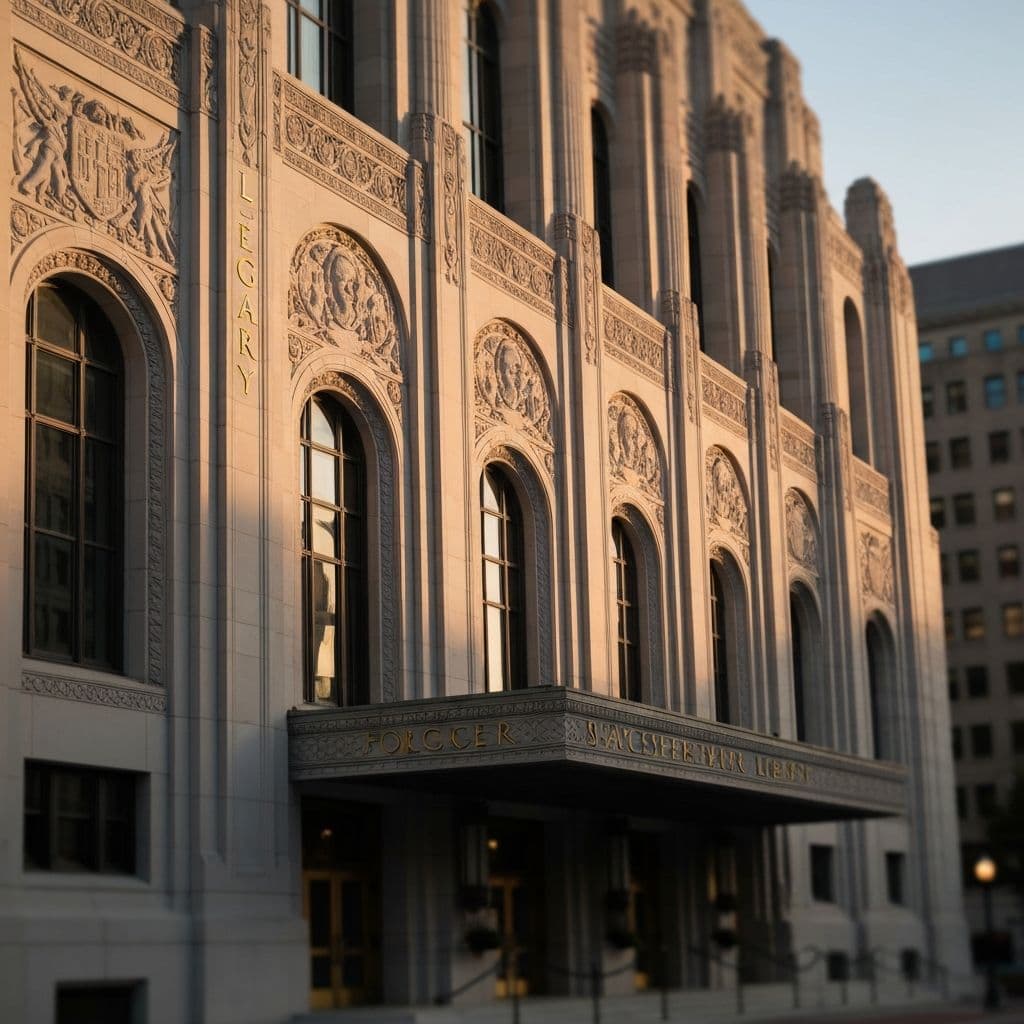
Scope and character expectations are the most common. A donor envisions a signature building; the program calls for efficient teaching space. A donor is drawn to a particular architect or architectural gesture; the campus context, the budget, or preservation requirements point elsewhere. Cultural institutions feel this acutely — a donor's vision for a gallery or reading room can sit uneasily beside curatorial needs, collection environments, and the character of a historic setting. Institutions stewarding landmark properties, as in the Dumbarton Oaks Main House and Folger Shakespeare Library renovations, must reconcile every enhancement with the historic fabric that defines the institution in the first place.
Schedule expectations follow closely. Donors often want to see the building realized within a horizon that is meaningful to them, which can pressure the institution to compress planning, skip enabling phases, or commit to delivery dates before the design supports them.
Budget expectations are subtler. A gift covers a number; the project costs what it costs. When the gift was announced against an early estimate, escalation and scope development open a gap that the institution — not the donor — typically must fill. And gifts routinely fund construction while leaving out the costs that determine whether the building succeeds: furnishing and equipment, commissioning, endowment for maintenance, and the operating budget the building will consume every year thereafter.
None of this makes donors adversaries. It makes them stakeholders with a partial view of the project, whose influence must be channeled through structure rather than through access.
Governance Starts in the Gift Agreement
The single most consequential governance instrument is the gift agreement, and its capital-project provisions deserve the same rigor as a construction contract. Before the agreement is signed, the institution should resolve, in writing:
- What the gift funds and what it does not — construction, soft costs, escalation, contingency, furnishings, and whether any portion endows operations and maintenance
- What the naming recognizes and what conditions attach to it — including what happens if the project scope changes, is delayed, or is not built
- What role the donor has in design and delivery — consultation, review of specific milestones, or none — and, critically, that the donor holds no approval authority over design, budget, or contractor decisions
- How schedule commitments are framed — as targets tied to the institution's delivery process, not as promises independent of it
- What happens when costs exceed the gift — who funds the gap, and who decides whether scope adjusts instead
Institutions are understandably reluctant to negotiate these points at the moment of a donor's greatest enthusiasm. But this is precisely when the institution has the most leverage and the relationship is at its strongest. Every ambiguity left in the agreement becomes a negotiation later, conducted mid-project, under schedule pressure, with the relationship at stake.
Decision Rights: One Owner Voice
Inside the institution, gift-driven projects create a second governance risk: fragmented decision-making. Advancement owns the donor relationship. The provost or director owns the program. Facilities owns delivery. The board owns the money. When a donor's design preference arrives through the advancement office and reaches the architect without passing through project governance, the project has acquired a shadow client.
The remedy is structural. The institution should establish a single project governance body with defined authority over scope, budget, and schedule decisions, and a single executive voice through which all direction reaches the design and construction teams. Donor input enters through a defined channel — typically advancement, reporting into governance — and is weighed there, alongside program needs and cost consequences, before anything becomes direction. This is standard owner-side planning discipline, and gift-driven projects need it more than most, because they have more voices with plausible claims to be heard.
The same discipline must extend into the contracts. Design and construction agreements should reflect the institution's decision structure, so that changes driven by donor preferences are processed as changes — priced, scheduled, and approved through formal contract administration — rather than absorbed informally until they surface as claims.
Protecting the Building's Second Life
A gift funds a building once. The institution operates it for fifty years or more. Governance that stops at ribbon-cutting has protected only the smaller half of the investment.
Gift-driven projects are particularly prone to operational blind spots because the gift conversation naturally centers on the visible building rather than the recurring costs it creates. Sound governance forces the question early: what will this building cost to staff, clean, condition, maintain, and eventually renew — and where does that money come from? The strongest gift agreements address this directly, whether through an operations and maintenance endowment component, a board-approved operating plan adopted before construction begins, or both. Institutions should also insist that operability — maintainability of systems, durability of finishes, realistic staffing assumptions — be reviewed during design with the same seriousness as the donor-facing spaces, because deferred operational thinking becomes deferred maintenance with a name on the door.
When to Bring in Owner-Side Help
The right time to structure governance for a gift-driven project is before the gift agreement is final — when decision rights, funding boundaries, and schedule language can still be shaped rather than repaired. An independent owner's representative gives the institution a party whose only interest is the institution's: translating donor enthusiasm into a deliverable scope, testing gift-stage estimates against real delivery costs, building the governance framework that keeps one owner voice in front of the design and construction teams, and making sure the building the donor makes possible is one the institution can afford to run. Institutions preparing a major gift-funded project, or already managing one where the boundaries have blurred, benefit most from bringing that discipline in early.