The Long Middle of a Multi-Year Development
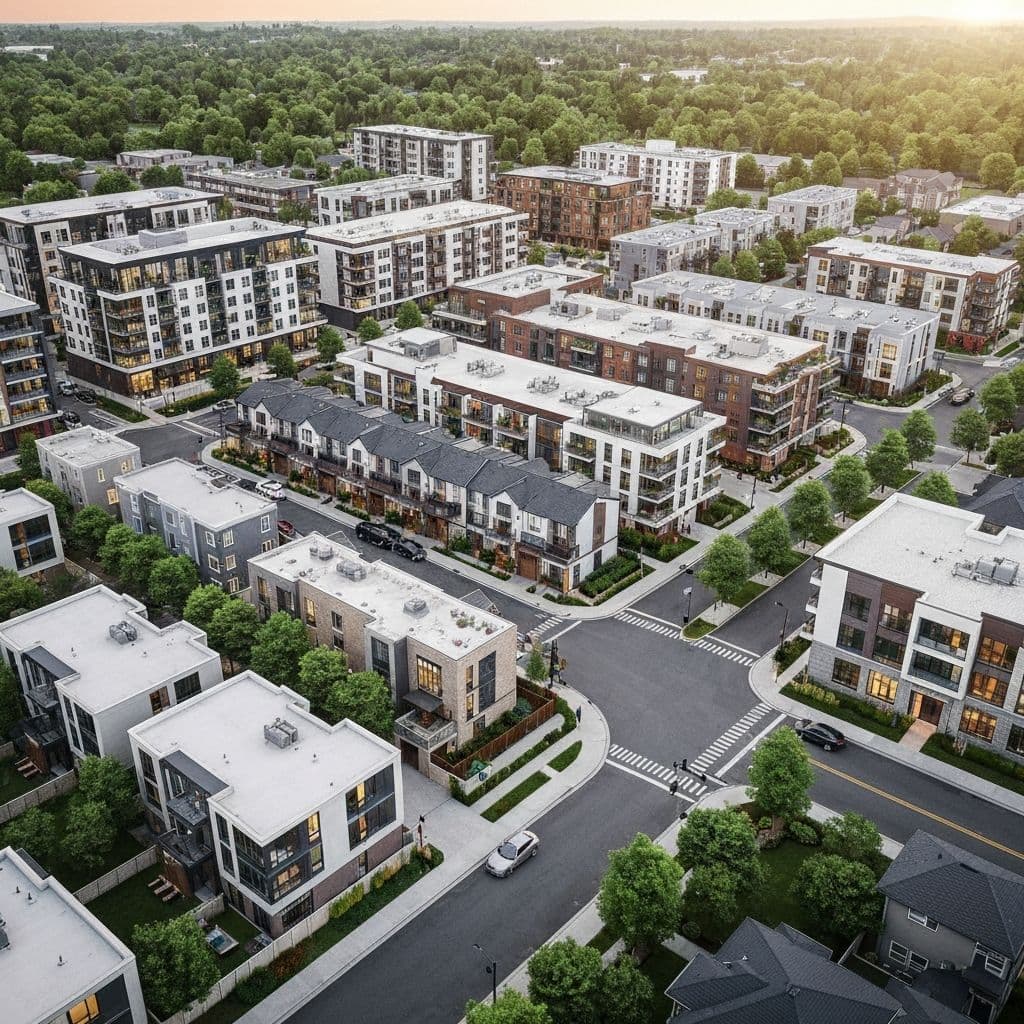
A residential community is easy to imagine at the beginning and easy to admire at the end. The hard part is the long middle — the years when the community is partly built, partly occupied, partly under construction, and entirely dependent on decisions made before the first resident arrived. Phasing is how an owner navigates that middle, and it is the single most consequential capital planning exercise in residential and community development.
Phasing is often treated as a construction logistics question: what gets built first, where the equipment stages, how the site drains during interim conditions. Those questions matter, but they are downstream of the real ones. The real questions are financial and strategic. When do amenities deliver relative to absorption? What infrastructure must be committed before it is needed, and how much of it? How does construction move through a neighborhood that people already live in? And if the market turns in year four, do the remaining phases still pencil?
Owners who answer these questions early, and revisit them at every phase boundary, protect value across the build-out. Owners who let the answers emerge from the construction schedule usually discover them as problems.
Amenity Timing: The Carry-Cost and Sales-Velocity Trade
Amenities sell communities. Clubhouses, pools, trails, parks, and retail anchors are the physical evidence of the lifestyle the marketing promises, and buyers in early phases are being asked to pay for a community that mostly does not exist yet. This creates the central timing trade of residential phasing.
Deliver amenities early and the owner carries them — operating cost, staffing, maintenance, insurance, and the capital itself — against a thin base of residents, for years. Deliver them late and early-phase sales velocity suffers, because buyers discount promises, and the first residents become the community's loudest skeptics precisely when the owner needs them as its advocates. Either error compounds: slow early absorption delays the revenue that funds later phases, while excess early carry drains the contingency those phases will need.
There is no universal right answer, but there is a right process. Amenity delivery should be mapped against projected absorption in the pro forma, tested against what competing communities offer at comparable stages, and staged where possible — a first-phase amenity sized to the early community with planned expansion, rather than the full build delivered on day one or deferred to year six. The point is that amenity timing is a capital allocation decision that deserves the same strategic planning rigor as land acquisition, not a line the construction schedule inherits by default.
Infrastructure Sequencing: Committing Capital Ahead of Revenue
Infrastructure is where phasing discipline meets physical reality. Roads, utilities, stormwater systems, and offsite improvements often must be sized and routed for the full build-out even when only the first phase is funded. Oversizing early infrastructure ties up capital that produces no revenue for years. Undersizing it forces disruptive, expensive retrofits through occupied neighborhoods later.
The owner's task is to find the genuine decision points. Some infrastructure truly is all-or-nothing — a trunk sewer line has one economical moment to be sized correctly. Other elements can be phased if the engineering anticipates it: roads built in interim sections, utility corridors reserved but not fully built, stormwater managed with interim facilities that convert as phases deliver. Every dollar of infrastructure that can be deferred without foreclosing the master plan is a dollar of risk the owner does not carry through the middle years.
Jurisdictional obligations complicate the sequencing. Proffers, development agreements, and public improvement triggers frequently tie infrastructure delivery to unit counts or calendar dates rather than to the owner's cash flow. These commitments are negotiated years before they bind, which is exactly why they should be negotiated with the phasing model open on the table.
Building Through an Occupied Community
From the second phase onward, residential development is construction inside someone's neighborhood. The people most affected by construction traffic, dust, noise, and early-morning starts are the owner's existing customers — and, in communities with active associations, an organized constituency with a direct line to local officials.
This deserves the same planning discipline as any occupied-facility project. Construction traffic should be routed away from occupied streets wherever the master plan allows, and the master plan should be drawn to allow it: dedicated construction entrances, haul routes that avoid completed phases, and staging areas positioned to serve later phases without crossing earlier ones. Working hours, communication protocols, and a genuine response channel for resident complaints are not public relations gestures; they protect sales. Prospective buyers tour communities where current residents talk, and a neighborhood at war with its developer is visible from the model home.
Keeping Later Phases Financeable When Markets Move
A multi-year build-out will cross at least one market cycle. Interest rates, construction costs, and absorption assumptions that underwrote the project will not hold for its duration, and the phases most exposed are the ones furthest out. Protecting their financeability is a continuous obligation, not a closing-day achievement.
Several disciplines matter. Phase boundaries should be drawn so each phase is severable — capable of standing as a complete, marketable community if the next phase is delayed, resized, or reprogrammed. Product mix within phases should preserve the ability to pivot between price points and formats as demand shifts. Cost commitments should be structured so that procurement for later phases is not locked to early-phase pricing assumptions; disciplined procurement and financial management across phases keeps the owner's options open when the capital markets narrow them. And the pro forma should be treated as a living instrument, re-underwritten at every phase gate with current costs, current absorption, and current financing terms, so the decision to launch the next phase is a decision rather than momentum.
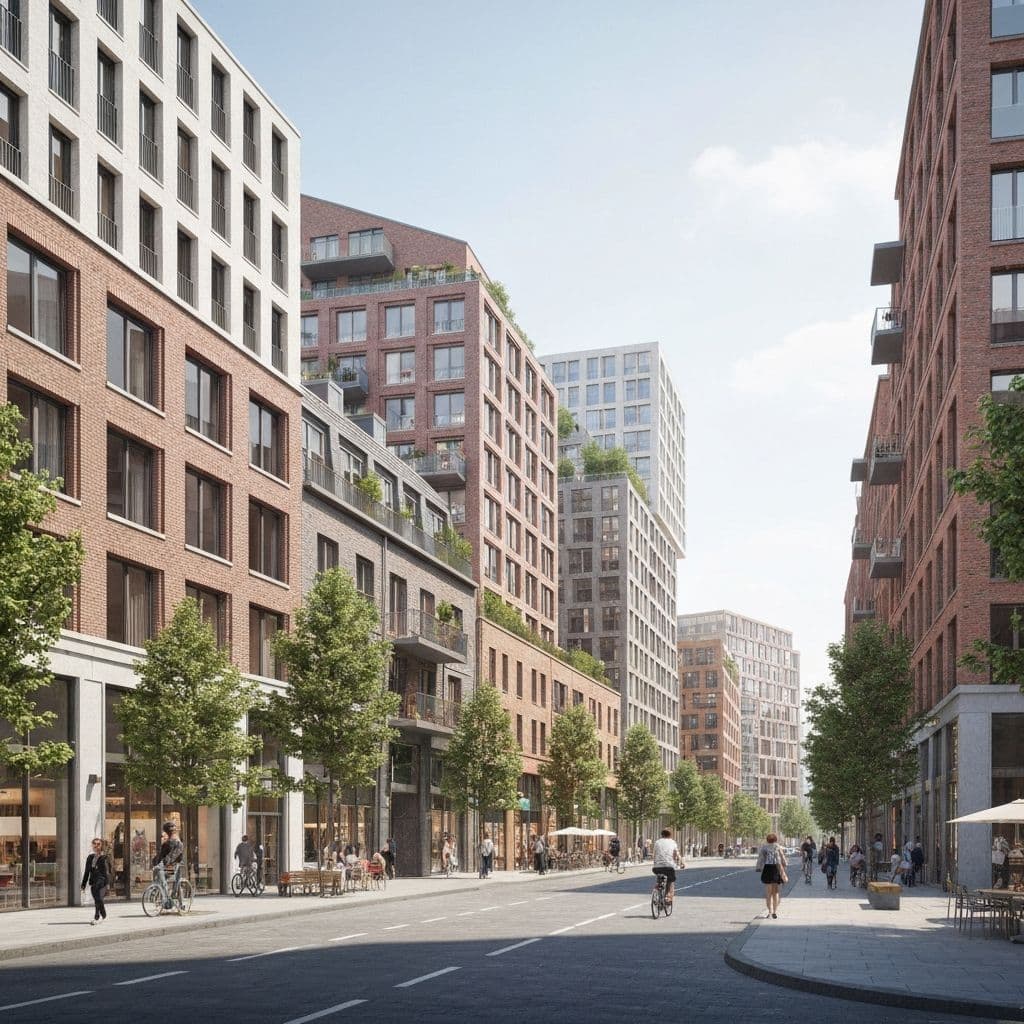
Mixed-use components sharpen all of this. Retail, office, or civic elements in a mixed-use development carry different financing structures, different absorption logic, and different lender expectations than the residential product around them, and their timing interacts with amenity strategy — a delivered retail street is an amenity; an empty one is a liability.
Governance Across the Build-Out
The common thread is governance. A phased development runs long enough that the market, the team, and often the ownership itself will change before build-out. What endures is the decision framework: phase gates with defined criteria, a current view of cost and absorption, severable phases, and an owner-side team accountable for the whole rather than the phase in front of them.
If your organization is planning or midway through a multi-year residential development, independent owner-side advisory can pressure-test the phasing strategy, the infrastructure commitments, and the financeability of what remains — before the middle years decide those questions for you.