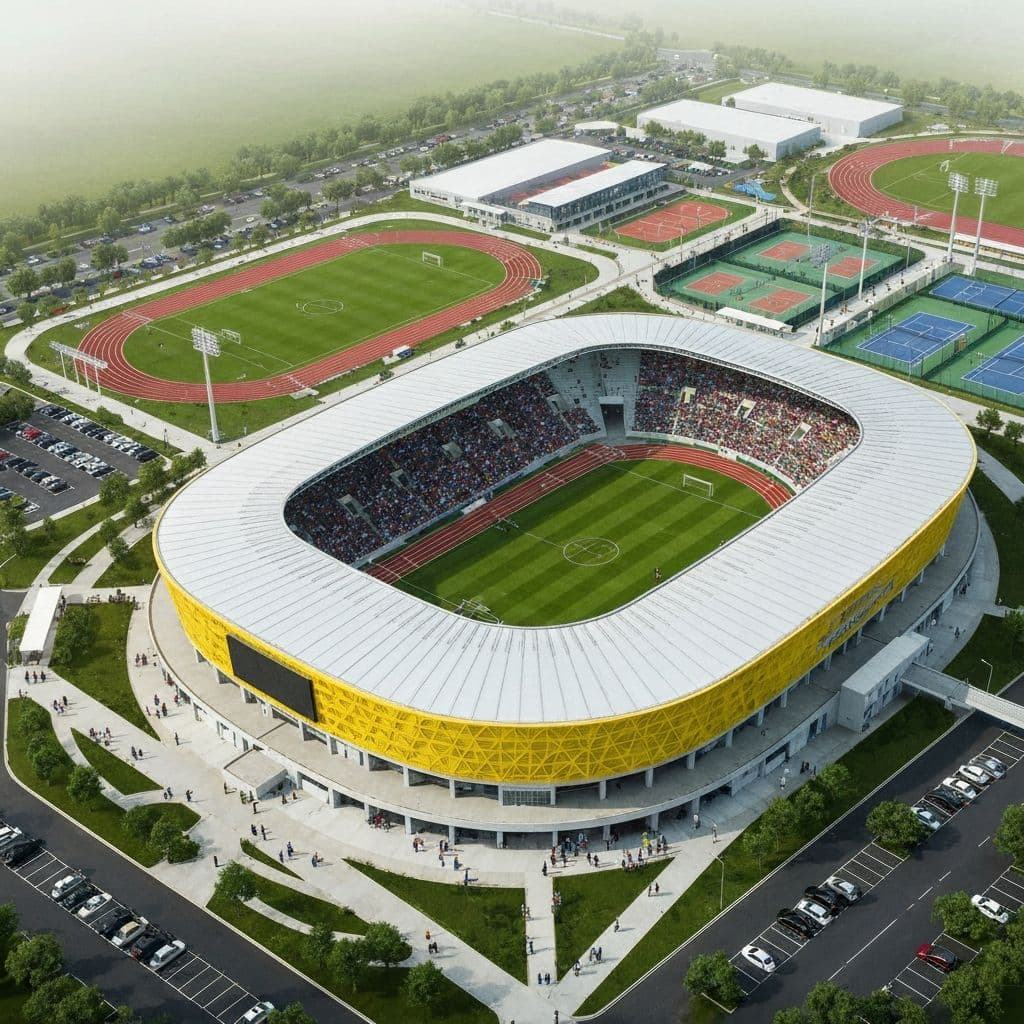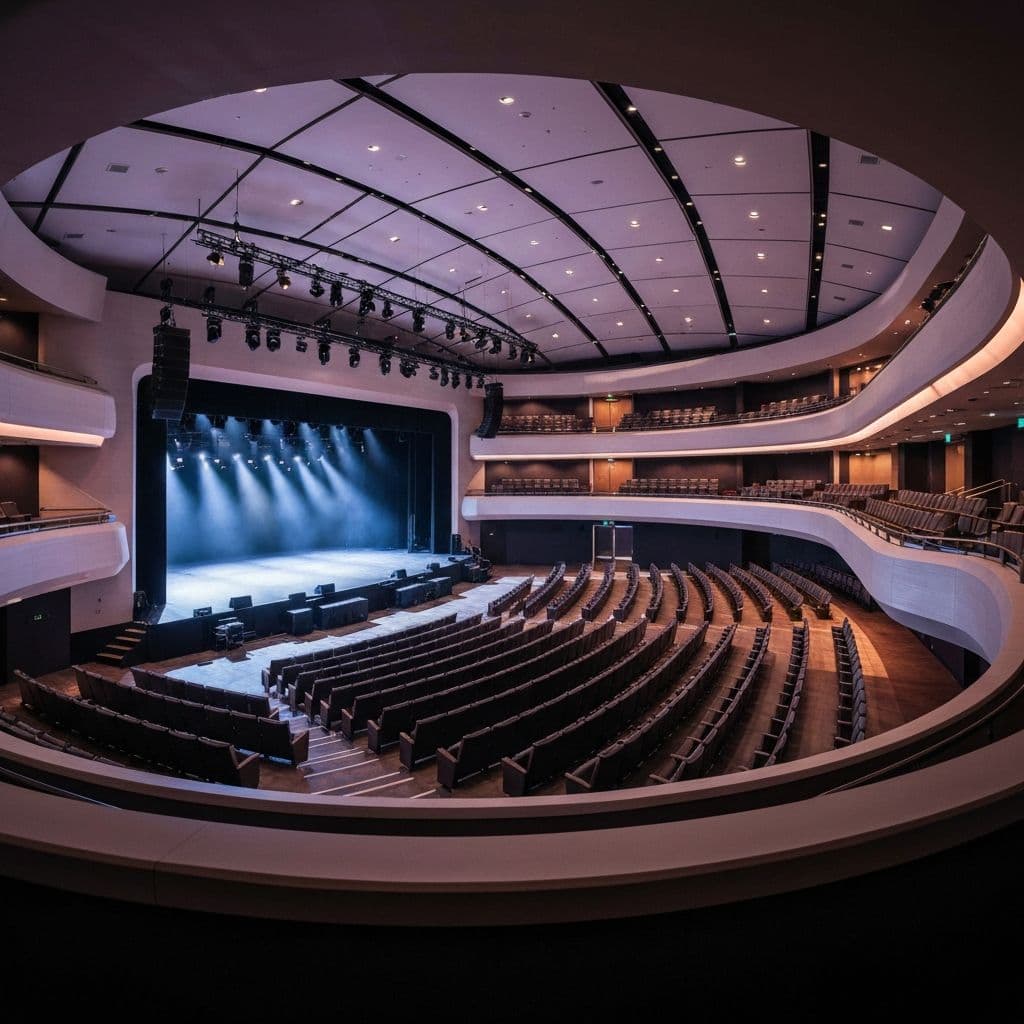

The Building Lasts Fifty Years. Its Technology Doesn't.
A well-built arena or stadium is a fifty-year asset. Almost nothing electronic inside it is. Video boards and LED displays reach obsolescence in roughly a decade, often less as fan expectations rise. Point-of-sale platforms turn over on short software cycles driven by payment standards and vendor roadmaps. Network switching, Wi-Fi, and distributed antenna systems age with each generation of devices in fans' pockets. Access control, ticketing hardware, security cameras, sound reinforcement, and broadcast infrastructure each follow their own replacement clock — and none of those clocks is synchronized with the others, or with the building.
This mismatch is the structural problem of venue technology. Owners of sports facilities and entertainment venues are effectively operating a portfolio of technology assets with staggered lifespans inside a single building with a fixed event calendar. Handled deliberately, that portfolio is refreshed in planned waves, each landing in an off-season window, each tested before it faces a crowd. Handled reactively, systems get replaced one at a time as they fail — each replacement wired into an ecosystem of aging neighbors it was never designed to talk to, each cutover scheduled by emergency rather than by calendar.
The difference between those two futures is a document most venues do not have: a technology refresh roadmap.
Why Piecemeal Replacement Fails
The piecemeal pattern is easy to fall into because each decision looks reasonable alone. The POS system fails, so the venue buys a new one. Two years later the network backbone is replaced, and the new switches expose assumptions the POS vendor made about the old network. The next year an access control platform arrives that cannot share credentials with ticketing, so gate staff run two devices. Every system works, roughly, on its own. The venue as an integrated operation degrades with each uncoordinated swap.
Three costs accumulate. Integration debt: each system was specified against whatever surrounded it at purchase, so the venue carries a growing web of custom interfaces, middleware workarounds, and version locks that make every subsequent change harder. Redundant infrastructure: successive vendors each installed their own cabling, servers, and head-end equipment because coordination was out of scope. And event-day fragility: no one can say how the full stack behaves under load, because it was never tested as a whole — it merely accreted.
The alternative is not replacing everything at once, which no budget supports. It is sequencing replacements so that shared infrastructure leads, dependent systems follow, and every wave is tested as an integrated set before events resume.
The Technology Refresh Roadmap
A refresh roadmap is a rolling multi-year plan — five years is a practical horizon, reviewed annually — that treats venue technology as one portfolio. Building one requires four inputs.
First, a complete inventory: every technology system in the building, its age, its vendor support status, its dependencies on other systems, and its realistic remaining life. Owners are routinely surprised by what this inventory reveals — systems out of vendor support, single points of failure shared by nominally independent platforms, and infrastructure nobody currently on staff installed.
Second, an infrastructure-first sequence. Network backbone, structured cabling, equipment rooms, power, and cooling are the foundation every other system stands on. Refreshing a video board onto a network that itself needs replacement within two years buys the disruption twice. The roadmap should schedule foundation work early, sized for the systems planned behind it, so later waves deploy onto infrastructure with headroom.
Third, batching logic. Systems that share dependencies should be refreshed in the same off-season window: the network upgrade with the Wi-Fi replacement it enables, the access control platform with the ticketing integration it must serve, the audio replacement with the control-room renovation that houses its head end. Batching concentrates disruption into fewer windows, lets integration be engineered once per wave instead of improvised per system, and gives vendors a shared coordination structure with defined interface responsibilities.
Fourth, honest window-fit. Each wave must fit its off-season window with margin — including procurement lead times for displays, switchgear, and specialty equipment, which frequently exceed the window itself and must be released months ahead. A wave that does not fit gets split at a clean boundary, not compressed until testing is the casualty.
Integration Testing Is the Difference Between a Cutover and a Gamble
The distinctive failure mode of venue technology is that everything works until the doors open. Systems commissioned individually, in an empty building, meet a full house and fail in ways no bench test predicted: Wi-Fi that served the commissioning crew collapses under tens of thousands of devices, POS terminals time out when every stand transacts simultaneously, access gates slow to a crawl when the ticketing platform is under real entry load.
Preventing this requires treating integration testing as a scheduled, protected phase of every refresh wave — not the time that remains after installation runs long. A credible test program has escalating stages: individual system commissioning, integrated end-to-end scenario testing across systems (a ticket scan that opens a gate, posts to the database, and updates the attendance dashboard), simulated load testing that approximates event conditions as closely as tooling allows, and finally a live soft-launch event — a scrimmage, an open practice, a reduced-capacity concert — where the full stack faces a real but forgiving crowd before it faces a sellout.
Equally important is the fallback plan. Every cutover needs a documented, rehearsed answer to the question of what happens if the new system fails during an event: revert to the old system, drop to a manual process, or isolate the failure and continue degraded. Fallbacks that exist only as intentions are not fallbacks. Technology integration and transition planning exists precisely to impose this discipline — defining the test stages, holding the schedule space for them, and refusing to let opening night be the first full-load test.
After the Cutover: Operating the Portfolio
A refresh wave is not finished when the systems pass testing. The transition into operations determines whether the investment holds its value: operations and event staff trained on the new systems before the first event, not during it; documentation, credentials, spare parts, and support contracts organized and handed over; monitoring configured so degradation is visible before it becomes failure; and the inventory and roadmap updated so the next wave starts from accurate information.
This is where technology planning connects to the broader operations discipline. The venues that stay ahead of their technology are the ones whose operations program treats these systems like any other critical asset — maintained on schedule, monitored continuously, and renewed on a planned cycle rather than at failure. The roadmap is not a one-time document; it is a standing management tool, reviewed each year as vendor roadmaps shift, fan expectations move, and the building's own capital plan evolves.
Getting Ahead of the Cycle
Owners rarely feel the cost of missing a technology roadmap in any single year. They feel it cumulatively — in integration debt, in event-day incidents, in upgrade projects that cost more because the infrastructure beneath them was never prepared, and eventually in a venue whose guest experience visibly lags its competition. The correcting move is straightforward and unglamorous: inventory what exists, sequence what must be replaced, batch the work into windows the calendar actually offers, and test each wave as an integrated whole before it meets a crowd.
For owners planning a significant technology investment — or staring at a stack of aging systems with no clear sequence — the time to bring in owner-side technology integration expertise is before the first purchase order, when the roadmap is being set. The systems will be chosen by vendors and installed by integrators, but only the owner carries the consequence of how it all works together on opening night.