The Technology-Intensive Venue
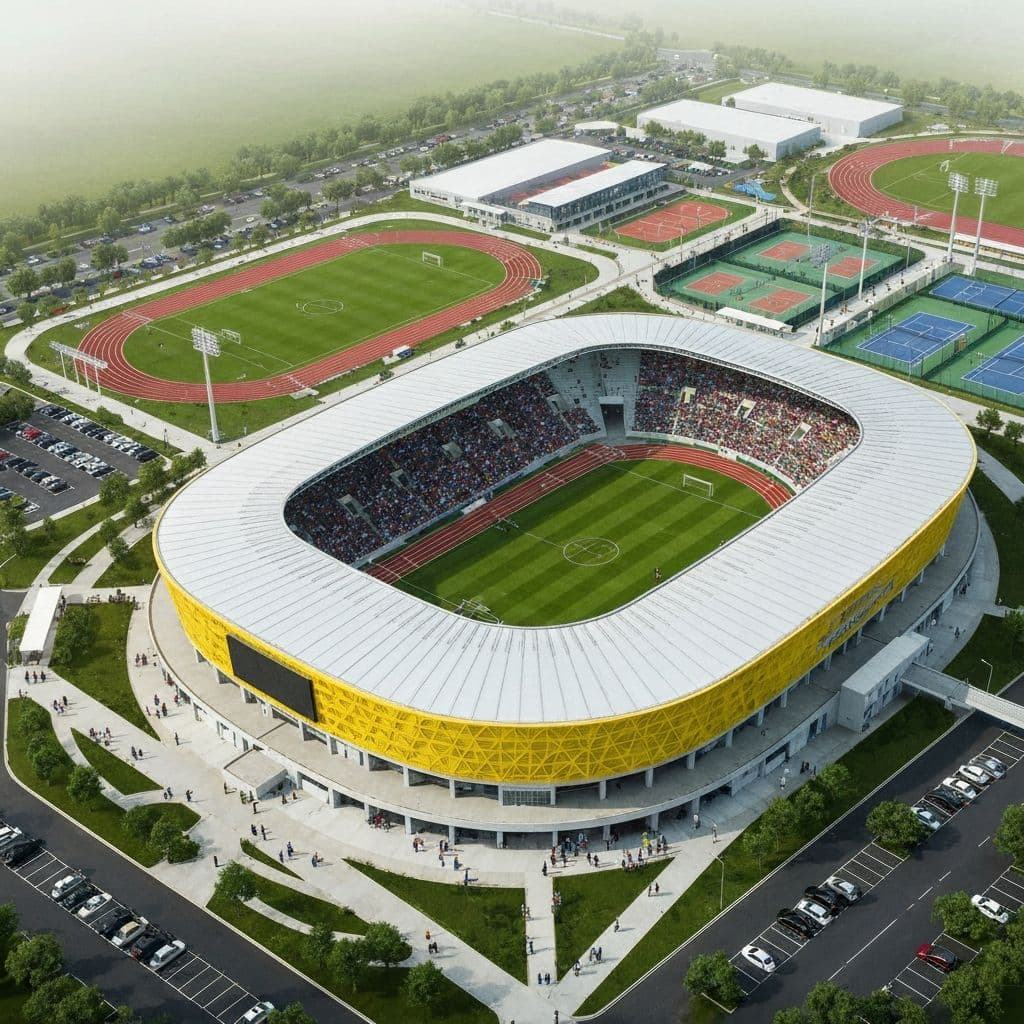
A modern sports arena, concert hall, or entertainment complex is not simply a large building with some screens and speakers added. It is a technology platform housed within a building envelope — a dense, interconnected ecosystem of systems that collectively define the guest experience, enable event operations, and protect public safety.
Consider the technology scope of a contemporary venue:
- Audio-visual systems — main video displays, ribbon boards, distributed displays throughout concourses and hospitality areas, sound reinforcement, broadcast infrastructure, replay systems, and production control rooms
- Connectivity infrastructure — distributed antenna systems (DAS) for cellular service, high-density Wi-Fi networks, wired network backbone, internet uplinks, and the supporting infrastructure of cable pathways, equipment rooms, and power distribution
- Security systems — surveillance cameras (hundreds or thousands), access control at every entry point and secure boundary, intrusion detection, screening equipment, command and control centers, and integration with local law enforcement systems
- Guest experience platforms — mobile applications, digital ticketing, wayfinding kiosks, interactive displays, loyalty program integrations, and the back-end data platforms that connect them
- Point-of-sale and commerce — POS terminals at every concession and merchandise location, cashless payment infrastructure, inventory management systems, and the network and power infrastructure that supports them
- Building management systems — HVAC controls, lighting management, energy monitoring, elevator and escalator controls, and the automation sequences that transition the building between event and non-event modes
- Life safety systems — fire alarm and suppression, emergency communication, mass notification, and emergency lighting, all of which must integrate with the building management and security systems
- Event operations technology — event scheduling platforms, changeover management systems, workforce management, and the operational dashboards that venue management uses to run events in real time
Each of these systems is complex in isolation. Their integration — making them work together reliably under the demanding conditions of a live event — is where venue technology projects most frequently fail.
Why Technology Integration Fails in Venues
The Late-Stage Problem
The most common cause of technology integration failure in venue projects is late engagement. Technology systems are treated as equipment to be procured and installed rather than as integrated building systems that must be planned, specified, and coordinated from the earliest design stages.
The pattern is predictable: the architectural and structural design proceeds based on the building program. MEP engineering focuses on conventional building systems. Technology is addressed in general terms — "state-of-the-art AV" or "comprehensive security" — without detailed specifications. The technology vendors are engaged late in the design process or during construction, when the infrastructure decisions that affect their systems have already been made.
The consequences of this late engagement include:
- Inadequate infrastructure — insufficient conduit pathways, too few equipment rooms, undersized electrical panels, inadequate cooling for technology spaces, and network backbone that cannot support the required bandwidth
- Spatial conflicts — technology equipment that does not fit in the spaces allocated, sightline obstructions from display mounting locations that were not coordinated with structural design, and cable routes that conflict with other building systems
- Missing integration points — systems from different vendors that were independently specified but never evaluated for compatibility, resulting in interface gaps that are discovered during installation or commissioning
- Compressed timelines — technology procurement and installation squeezed into the final months of the construction schedule, when the building is crowded with finishing trades and the margin for error is smallest
The Multi-Vendor Coordination Challenge
A typical venue technology deployment involves a dozen or more vendors, each responsible for a different system or subsystem. The AV integrator, the DAS provider, the Wi-Fi vendor, the security integrator, the POS platform provider, the building management system contractor, the fire alarm installer, the broadcast infrastructure company, and the application developers all bring specialized expertise — and specialized perspectives.
Each vendor optimizes for their own system's performance. The AV integrator designs the best possible AV system. The security integrator designs the most comprehensive security solution. The Wi-Fi vendor designs for maximum coverage and capacity. But no individual vendor is responsible for ensuring that all of these systems work together — that the DAS does not interfere with the Wi-Fi, that the security cameras can share video with the broadcast infrastructure, that the POS system can communicate through the venue's network under full event load, or that the building management system's lighting sequences do not conflict with the AV system's display programming.
This integration gap — the space between individual system excellence and collective system performance — is where venue technology failures live. Closing this gap requires someone who is not a vendor, not an advocate for any single system, but a coordinator who sees the entire technology ecosystem and manages the interfaces between systems.
The Parallel to Museum Exhibit Technology
Cultural institutions have faced a version of this challenge for decades. Museum exhibitions increasingly depend on complex technology — interactive displays, environmental control systems, multimedia presentations, conservation monitoring equipment — that must be integrated with the building's base systems. The technology commissioning discipline that has developed in museum practice — where exhibit technology must be tested as an integrated system before an exhibition opens — offers a directly applicable model for venue technology coordination.
The lesson from cultural projects is clear: technology integration does not happen automatically, no matter how good the individual vendors are. It requires deliberate planning, explicit specification of interfaces, and structured testing under realistic conditions.
Planning for Technology Early
Technology as a Design Discipline
Treating technology coordination as a design discipline — not a procurement activity — is the foundational shift that venue owners must make. This means engaging technology planning at the same time as architectural and engineering design, not after those disciplines have established the building's parameters.
Early technology planning addresses:
Infrastructure sizing and location. The number, size, and location of technology rooms (often called intermediate distribution frames, or IDFs, and main distribution frames, or MDFs) must be determined during schematic design. These rooms require specific environmental conditions — cooling, power, fire suppression — and specific relationships to the spaces they serve. Adding technology rooms after the floor plan is established is expensive and often results in suboptimal locations that compromise system performance.
Pathway planning. Cable pathways — the conduit, cable trays, and raceways that carry technology cabling throughout the building — must be coordinated with structural, mechanical, and electrical systems during design. In a venue with thousands of technology cable runs, pathway planning is a major coordination effort. Inadequate pathways discovered during construction lead to field-routed cabling that is expensive, difficult to maintain, and visually unacceptable in finished spaces.
Power and cooling budgets. Technology systems consume significant power and generate significant heat. The electrical and mechanical designs must include technology loads in their calculations from the earliest stages. Venues that underestimate technology power and cooling requirements discover during commissioning that they cannot run all systems simultaneously — a failure that is extremely expensive to correct.
Display and device locations. The placement of video displays, speakers, cameras, access control devices, wireless access points, and other visible technology elements must be coordinated with the architectural design. Displays that obstruct sightlines, speakers that create acoustic conflicts, cameras that cannot see their intended coverage areas, and access points that create radio frequency interference — all of these problems originate in design and are preventable with early coordination.
The Technology Requirements Document
Before any technology vendor is engaged, the owner should develop a comprehensive technology requirements document that defines:
- Functional requirements — what each system must do, described in operational terms rather than technical specifications. "Every seat must have cellular service sufficient for mobile video streaming" is a functional requirement. "Install a DAS with X number of nodes" is a technical specification that may or may not achieve the functional requirement.
- Integration requirements — which systems must share data, which must be controlled from common platforms, and what the expected user experience is at each integration point. These requirements prevent the common failure mode of individually excellent systems that cannot communicate with each other.
- Performance standards — measurable criteria for system performance, including capacity requirements (how many concurrent users, how many simultaneous transactions, how many camera feeds), response time requirements, and availability requirements. These standards become the basis for testing and acceptance.
- Operational requirements — how the venue's operations team will interact with each system, what training is required, what support and maintenance provisions are needed, and what the expected lifecycle is for each major system.
This requirements document becomes the foundation for technology procurement — enabling competitive bidding on clear specifications rather than vague descriptions, and providing measurable acceptance criteria that protect the owner's investment.
The Role of Technology Commissioning
What Technology Commissioning Means
Building commissioning — the systematic verification that building systems perform as designed — is an established discipline for mechanical, electrical, and plumbing systems. Technology commissioning applies the same rigor to the venue's technology systems, with additional complexity arising from the number of systems, the interdependencies between them, and the performance requirements unique to event operations.
Technology commissioning in a venue context includes:
Individual system verification. Each technology system is tested independently to confirm that it meets its specified performance requirements — AV for image quality and sound coverage, Wi-Fi for coverage and capacity, security for camera coverage and access control function. This phase identifies deficiencies that must be corrected before integration testing.
Interface testing. The connections between systems are tested to verify that data flows correctly and integrated behavior matches design intent. Interface testing reveals problems that individual system testing cannot — the video feed that works perfectly from the camera but fails when routed through the security server to broadcast infrastructure, or the access control event that triggers correctly but fails to propagate to building management monitoring.
Integrated scenario testing. The full technology ecosystem is tested under conditions that simulate actual event operations. This includes:
- Pre-event — the sequence of system activations and configurations that prepare the venue for an event, including lighting scenes, display content loading, network activation, security system arming, and POS system initialization
- Event ingress — the period when guests are entering the venue, with high-volume access control transactions, mobile ticketing scans, and initial load on Wi-Fi and cellular networks
- Full-capacity operations — simultaneous operation of all systems under peak load conditions, testing for bandwidth conflicts, power adequacy, thermal management, and system stability
- Emergency scenarios — testing the technology response to emergency conditions, including fire alarm activation, emergency notification, emergency lighting, and the orderly shutdown or override of entertainment systems during an emergency
- Event egress and post-event — the sequence of system transitions as the venue returns to non-event mode
Load testing and stress testing. Critical systems are tested beyond their normal operating parameters to identify failure points and verify that graceful degradation occurs rather than catastrophic failure. A Wi-Fi network should slow down under extreme load, not crash. A POS system should queue transactions rather than lose them.
Commissioning Timelines
Technology commissioning requires time — more time than most project schedules allocate. A comprehensive commissioning process for a major venue technology deployment typically requires:
- Four to eight weeks for individual system testing and deficiency correction
- Two to four weeks for interface testing and integration troubleshooting
- Two to four weeks for integrated scenario testing, including at least one full-scale event simulation
- Additional time for retesting after deficiencies are corrected
This commissioning timeline must be built into the project schedule before the first event. Projects that assume technology commissioning can be completed in the final two or three weeks before opening will open with inadequately tested systems.
The commissioning timeline also interacts with the construction schedule. Technology commissioning cannot begin until construction in the affected areas is substantially complete. This means the construction schedule must deliver completed technology infrastructure weeks or months before the opening date, not days before.
Owner-Side Oversight of Technology Vendors
The Independent Perspective
As discussed above, no individual technology vendor is responsible for the integrated performance of all venue technology systems. The venue owner must either develop internal capability to manage technology integration or engage independent oversight that represents the owner's interests across all technology vendors.
Effective owner-side technology oversight includes:
Specification review. Before technology contracts are awarded, an independent review of specifications to verify that integration requirements are addressed, that performance standards are measurable and enforceable, and that the collective technology scope is complete — no gaps between vendor scopes where integration responsibilities fall through.
Design coordination. Active management of the coordination between technology vendors during design, ensuring that interface specifications are agreed upon, that infrastructure requirements are consistent, and that spatial and pathway allocations are adequate for all systems.
Installation monitoring. During construction, monitoring technology installation quality — cable management, equipment mounting, labeling, and documentation — to standards that the venue will need to maintain and troubleshoot these systems for years after the vendors leave. Poor installation quality creates long-term maintenance problems and system reliability issues that are expensive to correct after the fact.
Commissioning management. Planning, scheduling, and overseeing the commissioning process described above, including developing commissioning scripts, coordinating vendor participation, documenting results, and tracking deficiency resolution. The commissioning manager must have the authority to require corrections before acceptance, regardless of schedule pressure.
Acceptance and turnover. Managing formal acceptance of each technology system, including verification that commissioning criteria have been met, documentation is complete, training has been delivered, and warranty provisions are in place. Premature acceptance transfers risk from vendor to owner without compensation.
Technology Integration & Project Transition provides the structured framework for managing these oversight functions — from early specification through final acceptance — ensuring that the owner's technology investment performs as intended from the first event.
Security Infrastructure as a Building System
Beyond Cameras and Access Cards
Venue security infrastructure is often treated as a standalone system, procured and managed independently from other building systems. This separation creates integration gaps that compromise both security effectiveness and operational efficiency.
Modern venue security is deeply integrated with other building systems:
- Access control integrates with ticketing — mobile tickets, RFID credentials, and biometric systems must communicate with the venue's ticketing platform and with crowd management systems that monitor venue occupancy
- Video surveillance integrates with broadcast and event operations — security cameras may share infrastructure with broadcast cameras, and event operations staff may need access to security video feeds for crowd management purposes
- Security screening integrates with queue management — the throughput of screening equipment directly affects guest entry experience and must be coordinated with gate operations, crowd flow design, and event timing
- Emergency systems integrate with building management — security command center operations must be coordinated with fire alarm, emergency notification, HVAC smoke control, and elevator recall systems
- Cyber security intersects with physical security — the networks that carry security video, access control data, and command center communications must themselves be secured against cyber threats
Planning security as an integrated building system — rather than an overlay on a completed building — ensures that these integration points are addressed during design, that infrastructure supports security requirements, and that operational protocols account for the interdependencies between security and other venue systems.
The Command Center as Integration Hub
The security command center is increasingly the integration hub for all venue technology during events. From this central location, staff monitor security cameras, manage access control, coordinate emergency response, track crowd density, and communicate with event operations leadership.
The design of this space — its size, technology fit-out, communication infrastructure, and integration with all venue systems — is a critical design decision that must be made early. Command centers designed as afterthoughts in leftover spaces are functionally compromised from day one. The integration requirements should be documented in the technology requirements and included in the commissioning process.
Drawing Parallels to Cultural Institution Practice
What Museums and Performing Arts Centers Have Learned
Cultural and arts institutions have navigated technology integration challenges that parallel those facing venue owners, and their experience offers practical lessons:
Exhibition technology integration — museums routinely commission complex technology systems (interactive displays, environmental controls, multimedia presentations, lighting systems) that must work together flawlessly when an exhibition opens. The commissioning discipline developed for exhibition technology — structured testing protocols, integration verification, dry-run events before public opening — translates directly to venue technology commissioning.
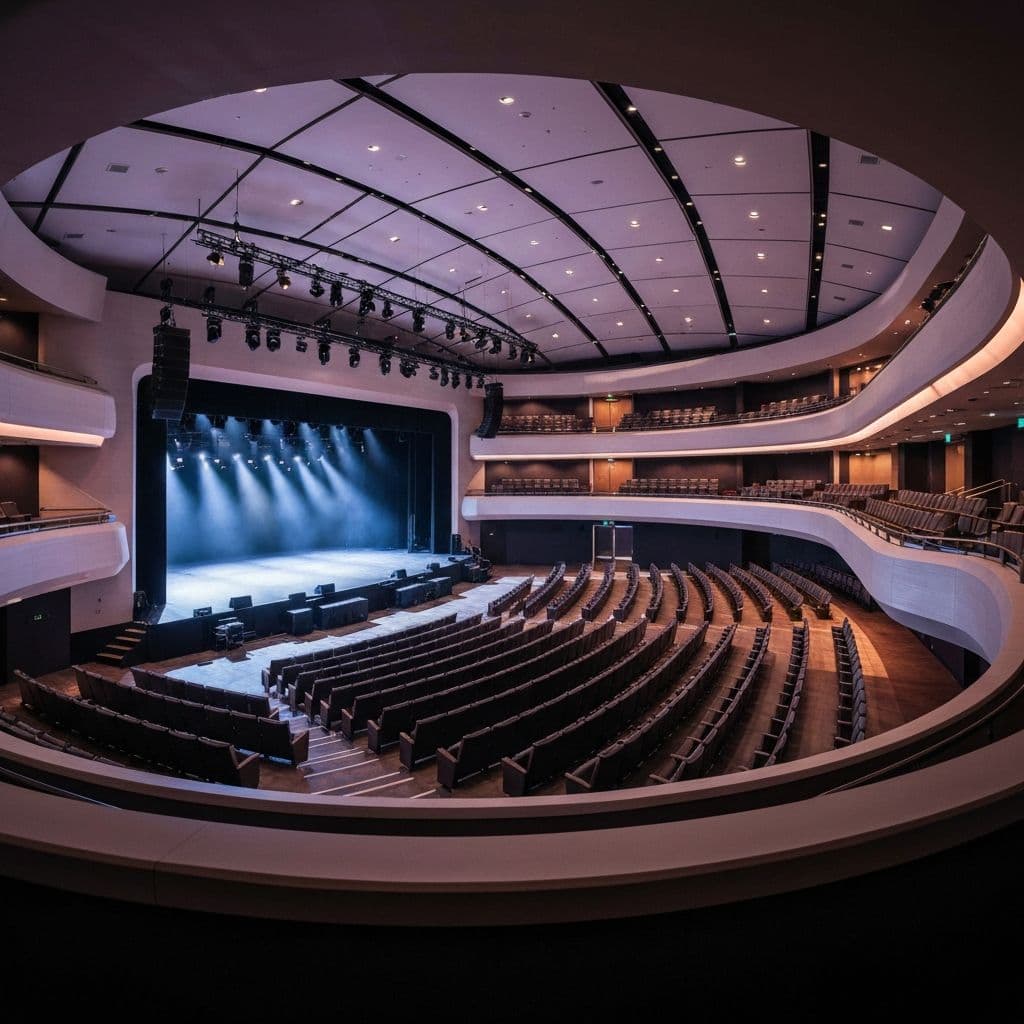
Acoustic system coordination — performing arts centers have decades of experience coordinating sound reinforcement, room acoustics, theatrical lighting, and stage management systems. The discipline of treating these as an integrated system — not independent components — and testing them under performance conditions before the first public performance is the same discipline that venue technology coordination requires.
Visitor experience technology — museums have been early adopters of mobile engagement, interactive wayfinding, and digital interpretation platforms. Their experience with the gap between technology promise and technology performance in public-facing applications is directly relevant to venue guest experience platforms.
The common lesson is that technology integration requires dedicated planning, structured testing, and operational readiness preparation. It does not happen automatically, regardless of how sophisticated the individual technology systems may be.
A Practical Framework for Technology Coordination
For owners planning venue projects or major venue technology upgrades, the following framework provides a structured approach to technology coordination:
Phase 1: Requirements Definition (Before Design) Define functional requirements, integration requirements, performance standards, and operational requirements for all technology systems. Identify the owner's technology priorities and establish the governance structure for technology decision-making throughout the project.
Phase 2: Design Integration (During Design) Engage technology planning alongside architectural and engineering design. Size and locate technology infrastructure. Develop detailed interface specifications between systems. Coordinate display, device, and equipment locations with architectural design. Establish the commissioning plan and timeline.
Phase 3: Procurement Coordination (Before Construction) Procure technology systems against clear specifications with measurable acceptance criteria. Coordinate vendor scopes to eliminate gaps and overlaps. Establish vendor coordination protocols for design, installation, and commissioning. Secure commitments for vendor participation in commissioning.
Phase 4: Installation Oversight (During Construction) Monitor technology installation for quality and compliance with design intent. Manage coordination between technology vendors and other construction trades. Track infrastructure readiness for technology deployment. Begin planning for operational training and support transition.
Phase 5: Commissioning (Before Opening) Execute structured commissioning — individual system testing, interface testing, integrated scenario testing, and load testing. Document and track deficiencies through resolution. Conduct full-scale event simulation. Complete operational training. Execute formal acceptance with verified performance.
Phase 6: Operational Transition (At Opening) Support the transition from project mode to operational mode, with vendor support on-site for early events, monitoring of system performance under real conditions, and rapid response to issues that emerge only during actual operations.
This framework requires time, investment, and discipline. It also requires someone who is accountable for its execution — a role that falls naturally within Design & Regulatory Management during the design phases and Technology Integration & Project Transition during procurement, commissioning, and operational transition.
The Cost of Getting Technology Right — and the Cost of Getting It Wrong
Comprehensive technology coordination adds cost to a venue project. The early planning, the integration management, the commissioning program, and the independent oversight represent real investments that appear on the project budget.
The cost of not making these investments is consistently higher. Technology integration failures result in emergency remediation at premium costs, operational workarounds that degrade guest experience, vendor disputes over integration responsibilities that were never clearly assigned, deferred functionality that leaves the owner's investment underperforming, and reputational damage from high-profile failures during events.
The investment in technology coordination is not overhead — it is risk management that pays for itself many times over.
For owners evaluating the technology coordination requirements of a venue project, the conversation should begin during strategic planning — before design, before procurement, and well before construction. Technology Integration & Project Transition provides the independent perspective and structured approach that venue technology coordination demands, ensuring that the owner's technology investment works as intended from the first event forward.