
The Active Venue Paradox
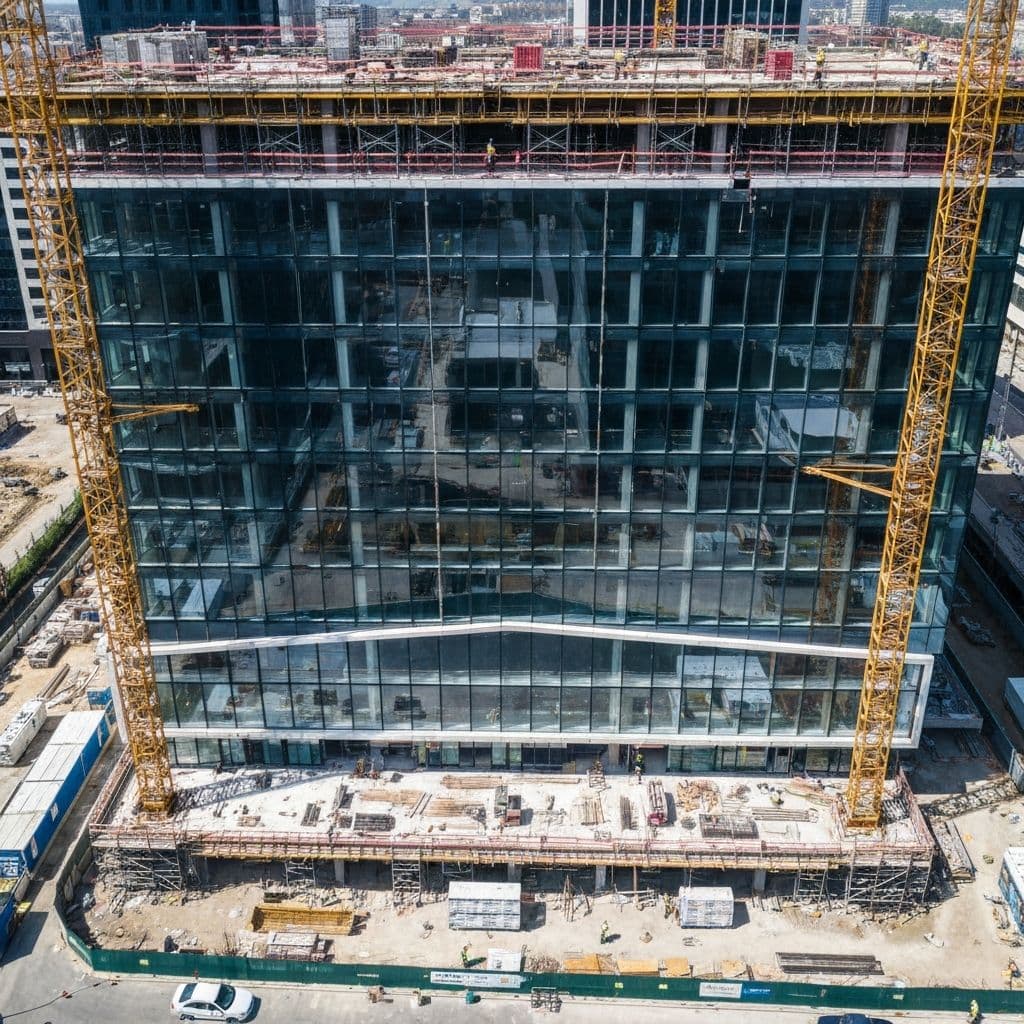
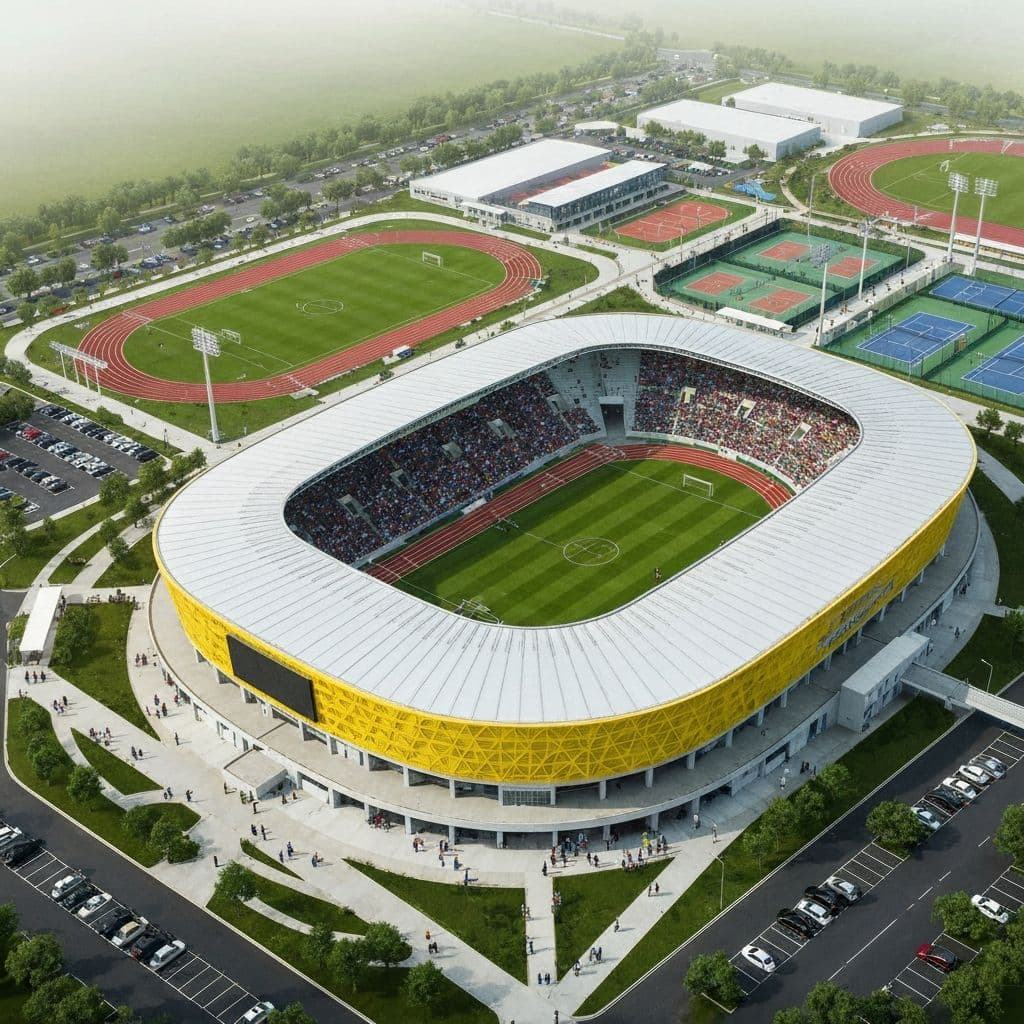
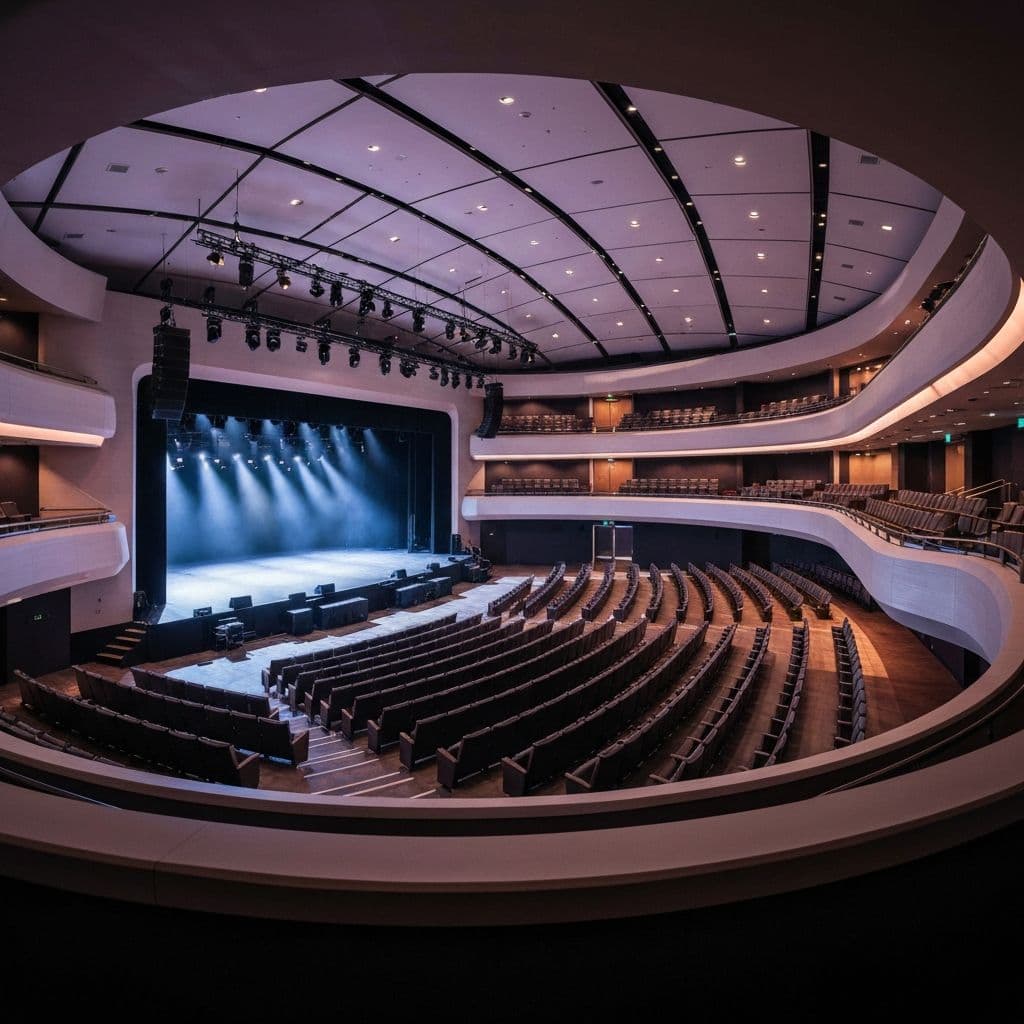
Sports and entertainment venues generate revenue by hosting events. Capital improvements make venues more competitive, more profitable, and more sustainable over time. But construction disrupts events. This is the active venue paradox: the facility must be improved to remain viable, but the improvement process threatens the operations that make the facility valuable.
Resolving this paradox requires a capital planning approach that treats operational continuity not as a constraint imposed on construction, but as the organizing principle around which construction is designed. Owners planning improvements to active sports venues and entertainment facilities must begin with the operational calendar, understand the revenue implications of every planning decision, and build delivery strategies that protect the business while upgrading the building.
This is fundamentally different from how most capital projects are planned. In conventional construction, the schedule is determined by the scope of work, the resources available, and the desired completion date. The building is empty and available. In active venue improvement, the schedule is determined by when the building is not hosting events — and those windows are often narrower, more fragmented, and less predictable than owners expect.
The Operational Calendar as the Master Constraint
Understanding the Construction Windows
Every active venue has a rhythm — periods of intense activity separated by periods of relative quiet. The capital planning process must begin with a thorough understanding of this rhythm:
Primary season or event calendar. For professional sports venues, this is the competitive season — including preseason, regular season, postseason, and any league-mandated events. For concert venues and performing arts centers, this is the performance season. For convention centers, this is the trade show and convention calendar. During these periods, construction access is severely limited or impossible for work that affects event-facing areas.
Secondary event programming. Many venues host events outside their primary programming — concerts at sports venues, corporate events at performing arts centers, community functions at arenas. These secondary events fill calendar gaps that might otherwise be construction windows, and they often generate significant revenue that cannot be casually sacrificed for construction access.
Maintenance and preparation windows. Between events, venues require time for changeover, maintenance, cleaning, and preparation. These periods are often shorter than they appear on the calendar, and they are not idle time — the operations team is actively using the facility.
The true construction window is what remains after all of these operational demands are satisfied. For many active venues, the available construction window is measured in weeks or a few months per year — not the months or years of unencumbered access that conventional construction assumes.
Seasonal Strategies
The compressed construction window forces owners to think in terms of seasonal campaigns rather than continuous construction programs. Several strategies have proven effective:
Off-season intensives. Concentrating major construction in the off-season — the period between the end of one primary season and the beginning of the next — provides the most construction access with the least operational impact. However, off-seasons are shorter than owners often expect once maintenance, changeover, and pre-season preparation are accounted for. A professional sports venue with a five-month off-season may have only three months of actual construction access after accounting for these operational requirements.
Dark-period campaigns. Some venues have mid-season dark periods — breaks in the performance schedule, all-star breaks, or extended road trips — that create construction windows within the active season. These windows are typically too short for major structural work but can accommodate systems upgrades, finish work, or preparation activities for the next off-season intensive.
Night and early-morning work. For improvements that do not affect event-facing areas, construction can sometimes proceed during overnight hours when the venue is not in use. This approach requires careful management of noise, security, and worker safety, and it comes at premium labor costs, but it can significantly extend the available construction time.
Phased multi-season programs. Major improvements that cannot be completed in a single off-season must be planned as multi-season programs — with each season's construction scope defined as a self-contained package that leaves the venue fully operational for the intervening event season. This approach requires exceptional strategic planning discipline to ensure that each season's work builds logically on the previous season's completion and that intermediate conditions are operationally viable.
Revenue Protection as a Planning Discipline
Quantifying the Revenue Impact
Every capital planning decision in an active venue has a revenue dimension. Taking a concession stand offline for renovation eliminates that stand's revenue contribution. Closing a premium seating section during construction eliminates those ticket sales. Reducing parking capacity during site work reduces parking revenue. Restricting venue access during construction may force the cancellation or relocation of secondary events.
Effective capital planning requires that these revenue impacts be explicitly quantified and factored into the project evaluation:
- Direct revenue displacement — the revenue lost from areas, services, or events directly affected by construction during each phase
- Indirect revenue effects — the impact of reduced guest experience, limited capacity, or diminished amenities on attendance, spending, and renewal rates
- Opportunity cost — the revenue from new events or programming that could have been booked in the construction-affected periods
- Recovery timeline — how quickly full revenue capacity is restored after each construction phase and whether there is a ramp-up period as guests and events return
This revenue analysis should be integrated into the capital planning process from the outset — not treated as a separate financial exercise. The construction phasing, schedule, and scope should be optimized to minimize total revenue impact, which may mean a different approach than minimizing construction cost or construction duration alone.
The Revenue Protection Conversation
Revenue protection requires a conversation between capital planning leadership and revenue management leadership that many organizations struggle to facilitate. The capital team focuses on construction scope, schedule, and cost. The revenue team focuses on event programming, ticket sales, and customer experience. Without a structured dialogue between these perspectives, the capital plan may inadvertently create revenue impacts that exceed the financial benefit of the improvement itself.
Strategic Planning & Advisory provides the framework for this conversation — ensuring that capital decisions are evaluated against their full economic impact, not just their construction cost, and that revenue protection objectives are embedded in the project delivery strategy from the earliest planning stages.
Fan and Guest Safety During Construction
The Heightened Safety Standard
Construction in an active venue introduces safety considerations that go beyond standard construction site safety. The public — fans, concertgoers, event attendees — is present in or adjacent to construction areas. These are not construction workers who understand and accept construction hazards. They are families with children, elderly patrons, guests who have been consuming alcohol, and large crowds moving through spaces that may have been reconfigured by construction.
The safety standard for construction in active venues must reflect this reality:
Physical separation must be absolute. Construction zones and public areas must be completely separated by barriers that prevent unauthorized access — not caution tape and cones, but solid barriers that cannot be inadvertently or intentionally breached by the public. These barriers must be maintained and monitored during every event.
Construction material and equipment storage must be secured. Tools, materials, and equipment left in areas accessible to the public create hazards and liabilities. Construction laydown areas must be secured between work periods, and protocols must prevent construction materials from being present in public areas during events.
Overhead protection is mandatory when construction occurs above or adjacent to public circulation areas. Falling object hazards — whether from construction activities or from incomplete conditions in areas under renovation — must be mitigated through overhead protection, exclusion zones, or schedule restrictions that prevent overhead work during events.
Egress and wayfinding must be maintained. Construction that alters building circulation patterns must be accompanied by updated egress plans approved by the authority having jurisdiction, revised wayfinding signage, additional staff to direct circulation, and event-specific safety briefings for venue operations personnel.
Emergency response coordination between the construction team and the venue's security and operations staff must be established before any construction begins in or adjacent to event areas. This includes communication protocols, evacuation procedures that account for construction conditions, and clear authority for suspending construction activities if a safety concern is identified.
Crowd Management Considerations
Large-venue construction introduces crowd management challenges that do not exist in other occupied renovation contexts. When 20,000 or 40,000 people are moving through a venue that is partially under construction, the margin for error in safety planning narrows dramatically. Considerations include:
- Reduced concourse capacity from construction barriers, which can create congestion at peak circulation times — entering the venue, halftime, and exiting
- Modified queuing patterns for concessions, restrooms, and entry gates that may increase wait times and patron frustration
- Impaired wayfinding when familiar landmarks and circulation routes are altered by construction
- Accessibility impacts when construction requires changes to accessible routes, seating locations, or service areas
These crowd management impacts must be evaluated through simulation or modeling before construction begins, not discovered during the first event after construction mobilization. The venue's event operations team and the local fire marshal should both be involved in reviewing crowd management plans for each construction phase.
Technology Upgrades in Active Operations
The Integration Challenge
Technology upgrades are among the most common capital improvements in active venues — refreshing video displays, upgrading Wi-Fi and cellular infrastructure, modernizing point-of-sale systems, replacing security cameras, or installing new building management systems. These upgrades present unique challenges in active venues because technology systems are deeply integrated with event operations and cannot typically be taken offline during events.
The planning challenges include:
Cutover timing. Switching from an old technology system to a new one requires a cutover period during which neither system may be fully operational. In an active venue, this cutover must occur during a window long enough to complete the transition and verify functionality before the next event. For complex systems — distributed antenna systems, security platforms, integrated POS networks — the required cutover window may be longer than the available gap between events.
Testing under load. Technology systems that work perfectly during low-usage testing may fail under the load conditions of a full-capacity event. Wi-Fi systems that handle 50 concurrent users in testing may collapse under 30,000. POS systems that process transactions smoothly in isolation may time out when every concession stand is running simultaneously. Load testing must be planned and conducted under realistic conditions before the first full-capacity event on the new system.
Fallback planning. If a new technology system fails during an event, the venue must be able to revert to an alternative — whether the old system, a manual process, or a temporary workaround. Fallback plans must be developed, documented, and tested for every critical system cutover.
Infrastructure requirements. New technology systems often require infrastructure upgrades — additional electrical capacity, new conduit pathways, upgraded network backbone, additional cooling — that must be installed before the technology can be deployed. This infrastructure work may be more disruptive than the technology installation itself and must be planned as part of the construction phasing.
Multi-Season Technology Roadmaps
Major technology upgrades in active venues are often best planned as multi-season roadmaps rather than single-event projects. This approach allows:
- Infrastructure upgrades to be completed in one off-season, with technology deployment in the next
- System-by-system deployment that limits the number of new systems being introduced simultaneously
- Learning from early deployments before committing to venue-wide rollout
- Budget distribution across multiple fiscal years
Scoping and Sequencing Across Multiple Seasons
The Multi-Year Capital Program
Significant venue improvements — premium seating renovations, concourse expansions, MEP system replacements, accessibility upgrades — often cannot be completed in a single off-season. They must be planned as multi-year capital programs with each year's scope carefully defined, sequenced, and budgeted.
Effective multi-year capital program planning requires:
A master plan that defines the end state. Before any construction begins, the owner must have a clear vision of the completed improvement — what the venue will look like, how it will function, and what capabilities it will have when all phases are complete. This master plan prevents the common problem of year-over-year scope decisions that result in a patchwork of improvements without coherent integration.
Phase boundaries that align with operational requirements. Each year's construction scope must be defined so that the venue is fully operational during the event season. This means each phase must include not just the primary construction but also all temporary provisions, reconnections, and finish work required to return the affected areas to service before events resume.
Independent phase viability. Each phase must deliver standalone value — improvements that are functional and beneficial even if subsequent phases are delayed or deferred due to budget constraints, changing priorities, or unforeseen circumstances. A multi-year program that depends on completing all phases to realize any benefit is fragile and risky.
Consistent design language across phases. When improvements are installed over multiple years, maintaining visual and functional consistency requires disciplined design standards. Premium finishes selected in year one must still be available in year three. Technology standards established in early phases must be forward-compatible with systems deployed in later phases.
Budget planning that accommodates escalation. Construction costs escalate over time. A multi-year capital program budgeted at year-one costs will be underfunded in later years. Procurement & Financial Management discipline requires that multi-year budgets include realistic escalation projections and that procurement strategies — early purchase of long-lead items, fixed-price commitments where possible — mitigate escalation risk.
Sequencing Priorities
When the scope of desired improvements exceeds what can be accomplished in a single season, owners must prioritize. The sequencing decision should consider:
- Revenue impact — improvements that directly increase revenue (premium seating, hospitality suites, upgraded concessions) may justify early scheduling to accelerate the return on investment
- Regulatory requirements — code compliance upgrades, accessibility improvements, and life safety system replacements may be non-discretionary and must be scheduled accordingly
- Infrastructure dependencies — some improvements require infrastructure that also serves future phases, making them logical first-phase candidates
- Guest experience impact — improvements that address the most visible guest experience deficiencies may warrant early scheduling to maintain market competitiveness
- Construction logistics — some improvements are more efficiently completed before others due to access requirements, structural dependencies, or trade availability
The Role of Owner-Side Advisory
Bridging Operations and Capital Planning
Active venue capital planning sits at the intersection of construction expertise and operational knowledge. The construction team understands building systems, procurement, scheduling, and trades. The operations team understands event delivery, guest experience, revenue generation, and institutional priorities. Neither team alone has the perspective to optimize the capital plan for both construction efficiency and operational protection.
Owner-side advisory serves as the bridge between these two essential perspectives. An advisor who understands both construction delivery and venue operations can:
- Translate operational requirements into construction constraints — ensuring that the construction team understands not just what areas are off-limits, but why, and what the consequences of encroachment would be
- Translate construction realities into operational planning — helping the operations team understand what construction can and cannot achieve within the available windows, and what operational adjustments are necessary to accommodate the capital program
- Evaluate trade-offs objectively — when construction efficiency conflicts with operational priorities (which it will, repeatedly), providing analysis that supports informed decision-making rather than letting the louder voice prevail
- Maintain program continuity across multiple seasons — ensuring that each year's construction scope advances the master plan, that lessons from previous seasons are incorporated, and that the program maintains momentum despite the annual interruption of the event season
Early Engagement Matters
The value of owner-side advisory is greatest when engagement begins before design — during the strategic planning phase when fundamental decisions about scope, phasing, and delivery approach are being made. Decisions made during strategic planning — which areas to renovate first, how many seasons the program will span, what level of operational disruption is acceptable — have enormous downstream consequences that are difficult and expensive to reverse once design and construction are underway.
Strategic Planning & Advisory during the earliest stages of capital planning helps owners make these foundational decisions with full visibility into their implications — operational, financial, and logistical — before commitments are made.
Building the Capital Plan
Owners of active venues who are beginning to think about capital improvements should approach the planning process with several principles in mind:
The operational calendar is the master constraint. Every other planning decision — scope, schedule, budget, delivery method — must be evaluated against its compatibility with the event calendar and its impact on revenue and guest experience. Construction efficiency that comes at the expense of operations is false efficiency.
Revenue protection is not optional. The capital plan must include explicit revenue impact analysis for each phase, and the total program should be optimized to minimize revenue disruption across the full program duration — not just within individual phases.
Safety is absolute. There is no acceptable level of risk to fan and guest safety from construction activities. Safety planning must be comprehensive, reviewed by independent authorities, and maintained rigorously throughout every event during the construction program.
Multi-season thinking is essential. Most significant venue improvements span multiple seasons. The planning framework must accommodate this reality with master plans, phased scopes, escalation-adjusted budgets, and governance structures that maintain continuity across annual cycles.
The coordination burden is real and must be resourced. The daily coordination between construction and operations does not happen automatically. It requires dedicated personnel, structured protocols, and clear authority. Underinvesting in coordination is the most reliable way to undermine both the construction program and the operational program simultaneously.
Capital improvement in active venues is a discipline that draws on construction management, operations management, financial planning, and stakeholder leadership simultaneously. Owners who approach it with the rigor it demands — and the advisory support it requires — can improve their facilities while protecting the operations that make those facilities valuable.
For owners beginning to evaluate capital improvements for an active venue, the planning conversation should begin well before the first off-season construction window. Strategic Planning & Advisory provides the structured framework for aligning capital ambitions with operational realities, ensuring that the improvement program serves the venue's long-term competitiveness without compromising its near-term performance.