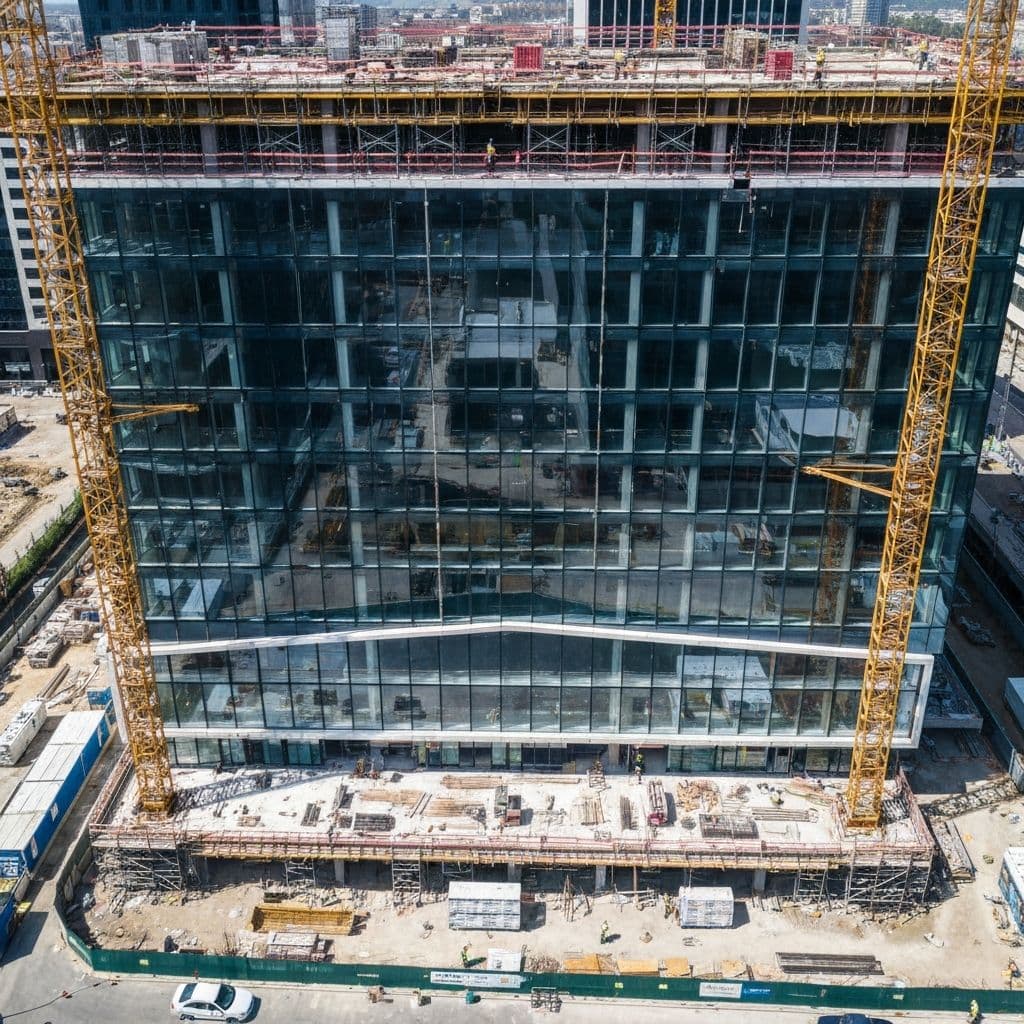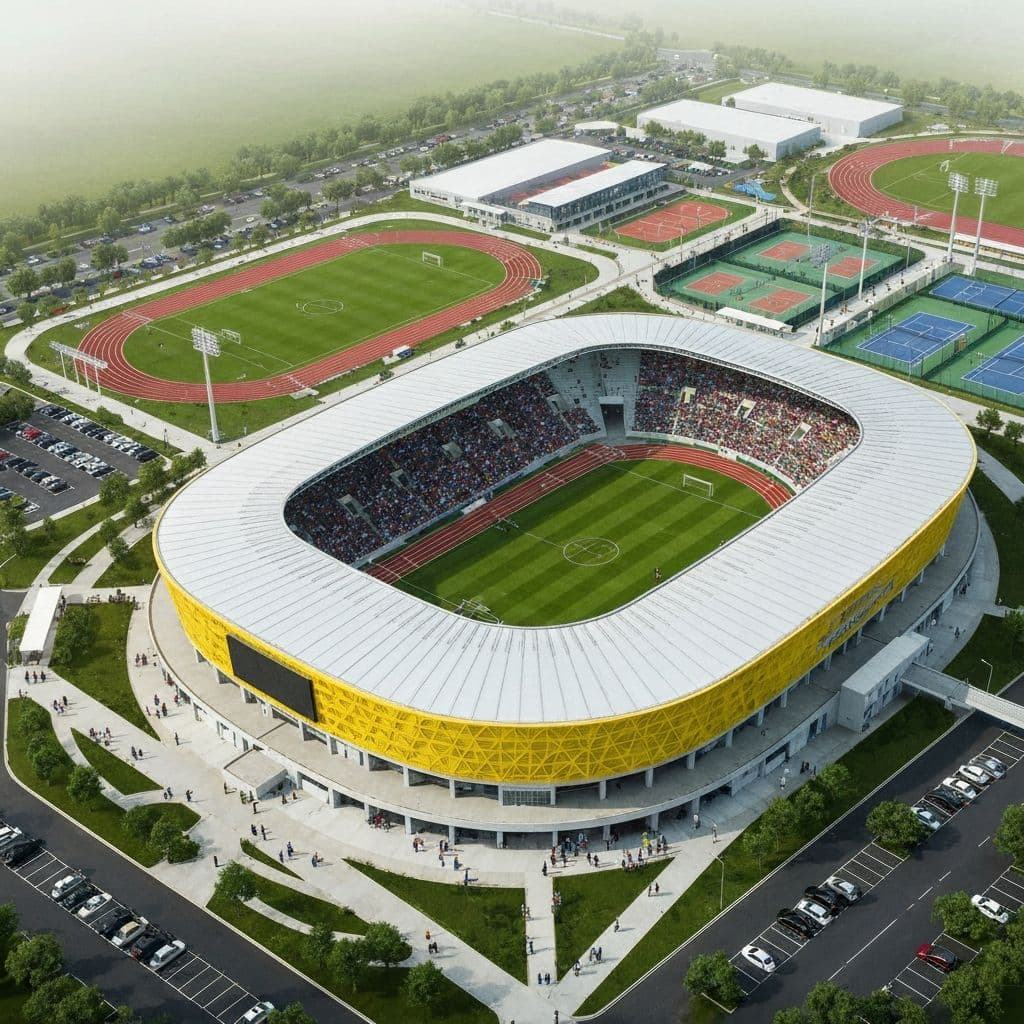
The Occupied Renovation Challenge
Closing a public-facing venue for renovation is almost never a realistic option. Museums cannot shutter for two years without losing membership, donor confidence, and community relevance. Performing arts centers cannot cancel multiple seasons without devastating resident companies and alienating subscribers. Sports arenas cannot relocate a franchise while the building is modernized. Hotels cannot vacate entirely without writing off years of revenue.
The decision to renovate while remaining open is usually the right one — economically, operationally, and institutionally. But it transforms the project from a construction challenge into a dual-management problem: delivering a capital project while simultaneously operating a public facility. These two activities have fundamentally different priorities, different rhythms, and different definitions of success. When they collide — and without deliberate management, they will — the result is operational disruption, visitor dissatisfaction, construction delays, and cost overruns.
Owners of cultural institutions, sports and athletics venues, hospitality properties, and entertainment facilities who are planning occupied renovations need to understand that the management challenge is not incidental to the project — it is the project. Getting the construction right matters. But getting the construction right while keeping the building operational, safe, and welcoming to the public is a fundamentally harder problem that requires different tools, different planning, and different leadership.
Why Occupied Renovations Fail
When occupied renovations go wrong, the root cause is rarely a construction deficiency. The construction team is usually capable of building what was designed. The failure is almost always a coordination failure — a breakdown in the relationship between the construction program and the operational program.
The Two-Boss Problem
In a conventional construction project, the construction team answers to the owner through a single chain of command. Priorities are clear, authority is defined, and conflicts are resolved through established contractual mechanisms.
In an occupied renovation, the construction team and the operations team both have legitimate authority over portions of the same building. The construction team needs access to spaces that operations wants to keep active. Operations needs quiet during performances, events, or guest sleeping hours that the construction schedule does not accommodate. Construction generates dust, vibration, and traffic that operations cannot tolerate. Operations generates visitor traffic, security requirements, and scheduling constraints that construction cannot efficiently work around.
Without a structured framework for resolving these competing demands, every conflict becomes an ad hoc negotiation. These negotiations consume management attention, slow both programs, and create an adversarial dynamic between teams that need to collaborate. The operations team begins to view the construction team as a threat to their mission. The construction team begins to view the operations team as an obstruction to progress. Both perspectives are understandable. Both are destructive.
Underestimating the Coordination Burden
Owners who have not managed occupied renovations before routinely underestimate the coordination burden. They budget and schedule for the construction as if it were a standalone project, then add a modest allowance for "phasing" and "coordination." This approach consistently fails because it does not account for:
- The schedule inefficiency of phased work. Moving construction crews in and out of areas based on operational schedules — working nights when the venue is closed, pausing during events, sequencing trades through spaces in non-optimal order — reduces construction productivity by 15-40% compared to unencumbered access. This inefficiency must be budgeted and scheduled, not absorbed through hope.
- The cost of separation and containment. Physical barriers between construction and occupied areas, noise attenuation systems, dust containment, temporary egress paths, and environmental monitoring all cost money and take time to install, maintain, and relocate as the project progresses through phases.
- The management overhead of dual operations. The daily coordination between construction and operations requires dedicated personnel, regular communication, and decision-making protocols that add management cost to the project.
- The impact on the operations side. Reduced capacity, relocated functions, visitor inconvenience, and staff disruption all carry costs that may not appear in the construction budget but are real consequences of the renovation.
Phasing Strategy: The Foundation of Occupied Renovation
The phasing strategy is the single most important planning decision in an occupied renovation. It determines not just the construction sequence but the operational impact, the project duration, the cost, and the risk profile. A phasing strategy that is developed without deep input from the operations team is a phasing strategy that will fail.
Principles of Effective Phasing
Start with operations, not construction. The natural instinct of a construction team is to develop the most efficient construction sequence and then accommodate operations around it. In occupied renovations, this approach must be inverted. The phasing strategy must start with a comprehensive understanding of how the facility operates — what spaces are critical, when they are needed, what functions they support, and what the minimum operational capacity is at each point in the calendar. The construction sequence is then designed around these operational constraints.
Define each phase as a complete operational state. Each construction phase must result in a building condition that is fully operational for the areas remaining in service. This means each phase must include not just the construction scope but also the temporary provisions — signage, wayfinding, accessibility accommodations, utility connections, life safety systems — that maintain a functional facility for every day the building is open to the public.
Minimize the number of phases consistent with operational requirements. Every phase transition costs money and time. Demobilizing from one area, installing new containment barriers, establishing new construction access routes, and mobilizing in a new area consumes weeks and introduces risk. The optimal number of phases is the minimum number that maintains adequate operational capacity throughout the renovation. More phases is not always better — it is always more expensive.
Build transition time into the schedule. The period between phases — when construction wraps up in one area and the operations team reclaims and reactivates it while construction mobilizes in the next area — is consistently underestimated. Operations teams need time to clean, inspect, move furniture and equipment back in, test systems, and prepare the space for public use. This transition period must be explicitly scheduled, not squeezed into the margin between phases.
Learning from Cultural Institutions
Cultural and arts institutions have navigated occupied renovations for decades, and their experience offers directly transferable lessons for venue owners:
- Gallery rotation as a phasing model. Museums routinely close galleries for reinstallation while keeping the rest of the museum open. The planning discipline — identifying which galleries can be closed simultaneously without reducing the visitor experience below an acceptable threshold, sequencing closures to maintain a coherent visitor path, and managing the logistics of art movement during construction — translates directly to venue renovation phasing.
- Performance schedule integration. Performing arts centers plan construction around their performance calendar with military precision. No construction activities that generate noise or vibration during performances. No deliveries that block stage doors during load-in. No utility shutdowns during technical rehearsals. This discipline — treating the performance schedule as an inviolable constraint — is exactly the approach that venue renovations require with respect to event schedules.
- Collection protection protocols. Museums develop detailed protocols for protecting artwork and artifacts during construction — environmental monitoring, vibration limits, physical barriers, emergency response procedures. While venue owners are not protecting irreplaceable art, they are protecting expensive equipment, technology infrastructure, and premium finishes that are equally vulnerable to construction damage.
Noise, Dust, and Safety: The Non-Negotiables
Environmental Management in Occupied Spaces
Construction generates environmental impacts — noise, dust, vibration, odors, temperature fluctuations — that are unremarkable in an unoccupied building but unacceptable in a space that is simultaneously serving the public. Managing these impacts requires both physical controls and procedural discipline.
Noise management in venues is particularly challenging because many venue functions are noise-sensitive. A performing arts center cannot tolerate construction noise during a concert. A hotel cannot tolerate construction noise during sleeping hours. Even a sports arena — which is hardly a quiet environment during events — cannot tolerate construction noise during corporate meetings, media events, or broadcast operations that occur in the building between games.
Effective noise management combines:
- Acoustic barriers between construction and occupied zones, rated to the attenuation level required by the specific use — which varies significantly between a sleeping hotel guest and an arena concourse during a game
- Schedule restrictions that limit the noisiest construction activities to periods when noise-sensitive operations are not occurring
- Real-time noise monitoring that provides objective data on noise levels in occupied areas and triggers alerts when thresholds are approached
- Alternative construction methods — saw cutting instead of jackhammering, bolted connections instead of impact-driven fasteners — that reduce noise at the source, even when these methods are less efficient or more expensive
Dust management is a health and safety requirement, not merely an aesthetic concern. Construction dust in a public venue creates respiratory hazards for visitors and staff, contaminates food service operations, damages sensitive equipment, and degrades the visitor experience. The containment strategy must include:
- Sealed barriers between construction and occupied areas, maintained under negative pressure to prevent dust migration
- HEPA filtration at construction zone exits and at any penetrations through containment barriers
- Housekeeping protocols that address dust accumulation in occupied areas adjacent to construction
- Monitoring for airborne particulate levels in occupied spaces
Vibration management matters for venues with sensitive equipment — broadcast infrastructure, acoustic systems, specialty lighting rigs — and for any venue where structural vibration could be perceptible to visitors. Vibration limits must be established based on the sensitivity of adjacent operations, and construction methods must be selected and monitored accordingly.
Life Safety During Construction
Maintaining life safety in a building that is simultaneously occupied and under construction is a regulatory requirement, a moral obligation, and a complex logistical challenge. The requirements include:
- Maintaining adequate egress from all occupied areas at all times, with exit paths that are clearly marked, properly lit, and free of construction obstructions
- Fire protection continuity — when construction requires taking fire suppression or alarm systems offline in specific zones, alternative protection measures must be in place and approved by the local authority having jurisdiction
- Construction traffic separation from visitor and staff circulation — construction workers, materials, and equipment should not share paths with the public
- Emergency response coordination between the construction team and the facility's operations and security staff, with protocols for construction-related emergencies (fire, structural instability, hazardous material release) that account for the presence of the public
Design & Regulatory Management plays a critical role in occupied renovations by ensuring that the phasing strategy and containment approach satisfy regulatory requirements for life safety, accessibility, and environmental protection throughout every phase of the project — not just at completion.
Visitor Experience Protection
The Business Case for Experience Management
For public-facing venues, visitor experience is not a secondary concern during renovation — it is a business imperative. Visitors who have a poor experience during a renovation do not simply return when the renovation is complete. Many do not return at all. They tell others about their negative experience. They cancel memberships, decline to renew subscriptions, and choose competing venues.
The financial analysis is straightforward: a renovation that improves the long-term facility but damages the visitor base during construction has undermined its own business case. Protecting visitor experience during renovation is not a luxury — it is a requirement for the renovation to achieve its financial objectives.
Practical Experience Protection Strategies
Communication is the first line of defense. Visitors who understand what is happening, why it matters, and what to expect are dramatically more tolerant of construction inconvenience than visitors who are surprised by it. Communication strategies for occupied renovations should include:
- Pre-visit communication through websites, email, social media, and booking confirmations that set expectations about what areas are available, what areas are closed, and what the visitor experience will be like during the renovation period
- On-site communication through signage, wayfinding, and staff training that acknowledges the renovation, explains its purpose, and guides visitors through the facility in its temporary configuration
- Progress communication that keeps visitors and stakeholders informed about what has been completed, what is currently underway, and what is coming next — transforming the renovation from a disruption into a story of improvement that visitors can follow and anticipate
Wayfinding requires continuous attention. As the renovation progresses through phases, visitor circulation paths change. Entrances, exits, restrooms, elevators, and key destinations may move or become temporarily unavailable. The wayfinding system must be updated with each phase transition, and staff must be trained on the current configuration so they can assist confused visitors.
Service level maintenance is non-negotiable. Reduced food service options, closed restrooms, limited accessibility, and understaffed guest services are the fastest ways to turn renovation inconvenience into visitor hostility. The operations team must plan for the reduced capacity created by each construction phase and ensure that service levels in the remaining operational areas compensate for what has been taken offline.
Create a "renovation experience" where possible. Some of the most successful occupied renovations have turned construction into a visitor attraction — viewing windows into construction areas, progress exhibits, behind-the-scenes updates, and commemorative programs that acknowledge visitor patience and give them a stake in the outcome. This approach works particularly well for cultural institutions and hospitality properties where visitor engagement is central to the brand.
Communication Protocols Between Construction and Operations
The Daily Coordination Imperative
In an occupied renovation, the construction team and the operations team must communicate every day — not through ad hoc conversations, but through structured protocols that ensure both teams have the information they need to operate without collision.
Effective communication protocols include:
Daily coordination meetings — brief, structured meetings between construction management and operations management that review the day's planned activities, identify potential conflicts, and resolve issues before they become problems. These meetings should follow a standard agenda: yesterday's issues, today's plan, tomorrow's preparation, outstanding decisions.
Look-ahead coordination — a weekly or biweekly review that extends the coordination horizon beyond the current day. This meeting evaluates the construction schedule for the coming two to four weeks, identifies activities that will affect operations, and gives the operations team adequate time to prepare — adjusting event schedules, notifying staff, communicating with visitors, or arranging temporary alternatives.
Escalation protocols — a defined process for resolving conflicts that cannot be settled at the daily coordination level. When the construction team needs access to a space that operations has committed to an event, someone must make the call. The escalation protocol defines who that someone is, what information they need, and how quickly the decision must be made.
Incident reporting — a system for documenting and addressing construction-related incidents that affect operations: noise complaints, dust infiltration, blocked access, utility disruptions, safety concerns. Each incident must be documented, investigated, and resolved — and the underlying cause addressed to prevent recurrence.
The Owner's Role in Coordination
The owner — or the owner's representative — plays a critical role in the coordination between construction and operations. Neither the construction team nor the operations team has the authority or the perspective to resolve all conflicts between their competing priorities. Someone must hold the institutional view — weighing the long-term value of the renovation against the short-term cost of operational disruption, and making decisions that serve the organization's overall interests.
Construction Management & Quality Control as an owner-side function provides this institutional perspective. An owner-side construction manager who understands both the construction program and the operational requirements can facilitate coordination, resolve conflicts, and ensure that neither program — construction or operations — dominates at the expense of the other.
Budgeting for the True Cost of Occupied Renovation
Occupied renovations cost more than unoccupied renovations. This is not a failure of management — it is a structural reality. The premium reflects the cost of phasing, containment, schedule restrictions, coordination, reduced productivity, and experience protection. Owners who budget for an occupied renovation as if it were an unoccupied renovation will either exceed their budget or compromise their operations.
The major cost drivers specific to occupied renovation include:
- Phasing costs — repeated mobilization and demobilization, construction of phase-specific containment barriers, temporary utility connections, and the schedule extension associated with sequential rather than concurrent work — typically adds 10-25% to the base construction cost
- Containment and environmental management — acoustic barriers, dust containment, negative pressure systems, monitoring equipment, and the ongoing maintenance of these systems throughout the project
- After-hours and restricted-access work — construction activities that must occur during nights, weekends, or other periods when the venue is not in active use, typically at premium labor rates
- Coordination and management overhead — the additional personnel, meetings, reporting, and decision-making infrastructure required to manage dual operations
- Visitor experience protection — temporary signage, wayfinding, communication programs, and supplemental staffing to maintain service levels during construction
- Operational displacement costs — the cost to the operations side of reduced capacity, relocated functions, and disrupted revenue streams during the renovation
These costs are real, predictable, and should be included in the project budget from the outset. Procurement & Financial Management discipline requires that occupied renovation budgets reflect the true delivery conditions, not an idealized construction scenario.
Planning for Success
Owners planning occupied renovations of public-facing venues — whether museums, arenas, hotels, or entertainment facilities — should begin with three foundational questions:
What is the minimum operational capacity the institution can sustain? This question defines the constraint envelope within which the renovation must be designed. It requires honest assessment from the operations team about what can be reduced, relocated, or temporarily closed — and what absolutely cannot.
What is the organization's tolerance for operational disruption? Different institutions have different tolerances. A university library during summer session can absorb more disruption than a hotel during peak season. A museum between major exhibitions has more flexibility than a performing arts center in the middle of its subscription season. Understanding the organization's tolerance — not just operationally but politically and reputationally — shapes the phasing strategy and the communication approach.
Who will own the coordination between construction and operations? This is perhaps the most important question, and the one most often left unanswered. Coordination does not happen automatically. It requires dedicated leadership, structured processes, and decision-making authority. Assigning this responsibility — whether to an internal leader or an external owner's representative — is a prerequisite for success.
The answers to these questions form the foundation of the renovation strategy. From that foundation, the phasing plan, the communication protocols, the budget, and the schedule can be developed with realistic expectations about what the project will demand.
Occupied renovation is difficult, but it is not new. Cultural institutions, hospitality operators, and venue owners have been doing it successfully for decades. The common thread in successful projects is not luck or exceptional construction — it is disciplined coordination between two programs that must coexist without colliding. Owners who invest in that coordination discipline from the start protect both their capital investment and the operational reputation that makes that investment worthwhile.
For owners evaluating how to approach a major renovation while maintaining public operations, Construction Management & Quality Control provides the structured coordination framework that occupied renovations demand — bridging the construction program and the operational reality to deliver the project without losing what makes the venue valuable in the first place.