The Deadline That Cannot Move
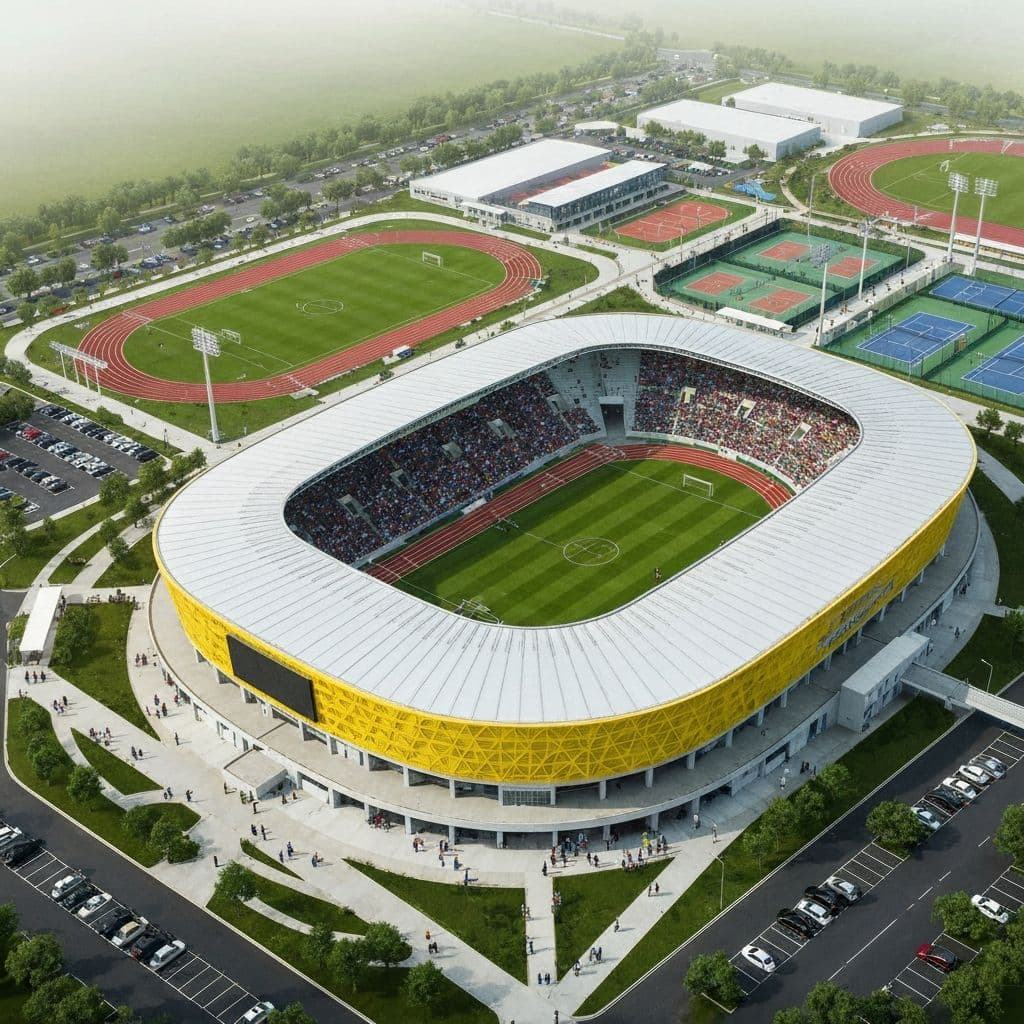
Most construction schedules are negotiable. An office fit-out that slips six weeks is an inconvenience. A stadium renovation that slips six weeks past the season opener is a public failure — broadcast commitments, ticketed events, league obligations, and institutional reputation collide with an unfinished building at once.
This is what makes between-seasons renovation a distinct delivery discipline. The off-season is an immovable construction window: it opens after the last event and closes, absolutely, before the first event of the following season. No extension can be negotiated, and no liquidated-damages clause compensates for a home opener played in a construction site. Owners of sports venues and entertainment facilities who internalize this constraint make different decisions at every stage — scoping, procurement, contracting, and execution — than owners who treat the off-season as an ordinary schedule with an aggressive end date.
The pattern among successful off-season programs is consistent: they are won or lost before mobilization. The owners who open on time are the ones who sized the scope honestly, bought the long-lead materials before design was finished, wrote acceleration and deferral mechanics into the contract, and managed the window as a countdown rather than a calendar.
Scope the Window, Not the Wish List
The first discipline is the hardest: deciding how much work one window can actually hold. Off-seasons are shorter than they appear. From a nominal six-month gap, subtract demobilization of event operations, weather constraints on exterior work, commissioning and inspection at the back end, and the pre-season activities the operations team needs the building for — orientation, food-service load-in, systems training, rehearsal events. The construction window that remains is often two-thirds of the calendar gap, sometimes less.
Honest scoping starts from that real window and works backward. For each candidate scope element, the question is not whether the work is desirable but whether it can be demolished, built, inspected, commissioned, and turned over inside the window with margin to spare. Scopes that fail that test belong in next year's window or in a multi-season phasing plan with clean season-boundary conditions.
The most reliable scoping tool is a pull-planned schedule built before commitments are made — starting from the required turnover date and working backward through commissioning, construction, procurement, and design. If the backward pass says design needed to start two months ago, the scope is wrong for this window. Owners who run this analysis early make deferral decisions in the planning room. Owners who skip it make the same decisions in July, under duress, at premium cost.
Buy Long-Lead Items Before Design Is Finished
Conventional project sequence — finish design, bid the work, then procure — does not survive contact with an off-season window. Switchgear, air-handling units, elevators and escalators, custom seating, kitchen equipment, video and audio components, and specialty glazing routinely carry lead times that exceed the entire construction window. Wait for a complete design before ordering, and the equipment arrives after the season has started.
The answer is deliberate early procurement: identifying long-lead items during schematic design, completing the design of those specific elements first, and releasing purchase orders months before the balance of the documents are done. This can mean the owner procures equipment directly and assigns it to the contractor later, or authorizes early-release packages under a construction-manager arrangement. Either way, the owner accepts a calculated commitment — buying equipment against a design still in motion — and manages it so early purchases constrain the remaining design rather than being invalidated by it.
This is a place where procurement discipline and contract structure intersect. Early purchases need clear terms for storage, risk of loss, warranty commencement, and assignment. Done well, early procurement removes the single most common cause of off-season overruns. Done informally, it creates gaps in accountability that surface precisely when there is no time to resolve them.
Contract for the Window: Acceleration Triggers and Deferral Rights
Standard construction contracts assume schedule slippage can be traded for money at the end of the job. Off-season contracts must assume the opposite: money can be traded for schedule during the job, but only if the mechanics are pre-agreed.
Three contract features matter most. First, milestone-level schedule transparency — contractually required interim milestones with genuine float visibility, so the owner can see slippage in week six rather than being assured everything is fine until week sixteen. Second, pre-priced acceleration triggers: defined milestones which, if missed, obligate the contractor to implement recovery measures — additional shifts, weekend work, resequencing — under compensation terms negotiated at contract signing rather than mid-crisis. An owner negotiating overtime rates in August, with opening day visible, has no leverage; the same owner negotiating those rates in January has plenty. Third, explicit deferral rights: the owner's ability to remove defined scope elements from the current window and shift them to the next one, with pricing mechanics agreed in advance, so a deferral decision is an orderly deduction rather than a disputed claim.
These provisions cost negotiating effort up front. They repay it the first time the schedule wobbles — which, in a compressed window with no float, it will.
Manage the Window as a Countdown
Execution inside the window demands a tighter oversight rhythm than conventional projects. Weekly owner meetings are not enough when the entire job lasts twenty weeks; slippage compounds too fast. Effective off-season oversight looks different: short-interval schedule reviews against the pull plan, early and continuous coordination with inspectors and the authority having jurisdiction so approvals do not stack up at the end, and commissioning treated as a scheduled phase with protected duration — not a buffer to be consumed by late construction.
Quality assurance deserves particular protection. The temptation in a compressed window is to accept marginal work to hold the date, on the theory that punch-list items can be corrected later. In a stadium, later means next off-season: a full year during which deficient work is exercised by full-capacity events. Independent construction-phase oversight exists to hold that line — verifying that what is being installed at speed is also being installed correctly, and that the rush to open does not trade away the quality the owner is paying for. From major professional venues to collegiate facilities, the scale differs, but the constraint — a season that will start whether or not the work is done — is identical.
Deferring Well Is a Skill, Not a Failure
The final discipline is knowing when to stop. At some point in most off-season programs, reality diverges from plan — a delivery slips, a concealed condition surfaces, weather takes a week. The owner's best move is often not acceleration but deferral: pulling a scope element cleanly out of the window, restoring the affected area to safe, code-compliant, presentable condition, and completing the work next year.
Good deferral requires preparation. Each major scope element should have a defined fallback condition — what it takes to leave that area event-ready if the work stops at a phase boundary. Scopes touching life safety or egress need particular care: partial completion is acceptable only if the interim condition fully satisfies code, confirmed with the authority having jurisdiction before the deferral decision, not after. Owners who prepare these fallback positions can make deferral calls quickly and cheaply. Owners who have not face the worst version of the choice: accelerate at any cost, or open late.
For owners planning renovation work against a fixed season calendar, the highest-leverage weeks are the earliest ones — when scope is sized, long-lead procurement is set in motion, and the contract mechanics for acceleration and deferral are written. Bringing owner-side delivery expertise into those decisions, before commitments harden, is how venues take on ambitious off-season programs and still open on time.