Clearing Up a Common Misconception
The term "owner's representative" is used frequently in the construction industry, but its meaning varies widely depending on who is using it. Some firms use it to describe basic project management services. Others use it as a marketing label for construction monitoring. Neither captures what genuine owner representation involves or why it matters.
True owner representation is a fiduciary-level commitment to protecting the owner's interests across every dimension of a capital project — scope, budget, schedule, quality, and risk. The owner's representative does not work for the architect, the contractor, or the construction manager. They work exclusively for the owner, and their value is measured by how effectively they protect the owner's investment and institutional goals.
This distinction is not academic. It has practical consequences that affect every decision made during a project's lifecycle.
The Structural Problem Owner Representation Solves
In a typical capital project, the owner contracts separately with an architect, a general contractor or construction manager, and various consultants. Each of these parties has contractual obligations to the owner, but they also have their own business interests. The architect wants to realize their design vision. The contractor wants to complete work efficiently and profitably. The construction manager wants to maintain schedule.
None of these parties are structurally positioned to prioritize the owner's interests above their own. This is not a criticism — it is simply how the contractual relationships work. The architect's fee is typically tied to construction cost, creating a structural incentive toward larger projects. The contractor's profit is affected by change orders and schedule, creating incentives that may not align with the owner's budget goals.
An owner's representative fills this structural gap. They provide the owner with an advisor whose sole obligation — contractually and professionally — is to the owner's success.
What Owner Representation Looks Like in Practice
Pre-Construction Phase
During pre-construction, the owner's representative helps define project scope, establish realistic budgets, evaluate delivery methods, and select the right project team. This phase is where the highest-impact decisions are made, and where experienced owner representation provides the greatest return.
Specific activities include:
- Facilitating the development of a clear project charter that defines success criteria
- Reviewing design proposals for scope alignment and cost implications
- Advising on delivery method selection — design-bid-build, CM at risk, design-build, or hybrid approaches
- Leading procurement processes to ensure competitive, qualified proposals
- Establishing project governance structures and communication protocols
Design Phase
During design, the owner's representative ensures that the design team's work remains aligned with the owner's program requirements, budget, and schedule. This involves regular design reviews, cost estimate reconciliation, and constructability analysis.
The owner's representative also manages the interface between the owner's operational staff and the design team. In institutional projects — particularly cultural and civic facilities — operational requirements are complex and frequently evolve during design. Without dedicated owner-side coordination, critical operational needs can be overlooked until construction is underway.
Construction Phase
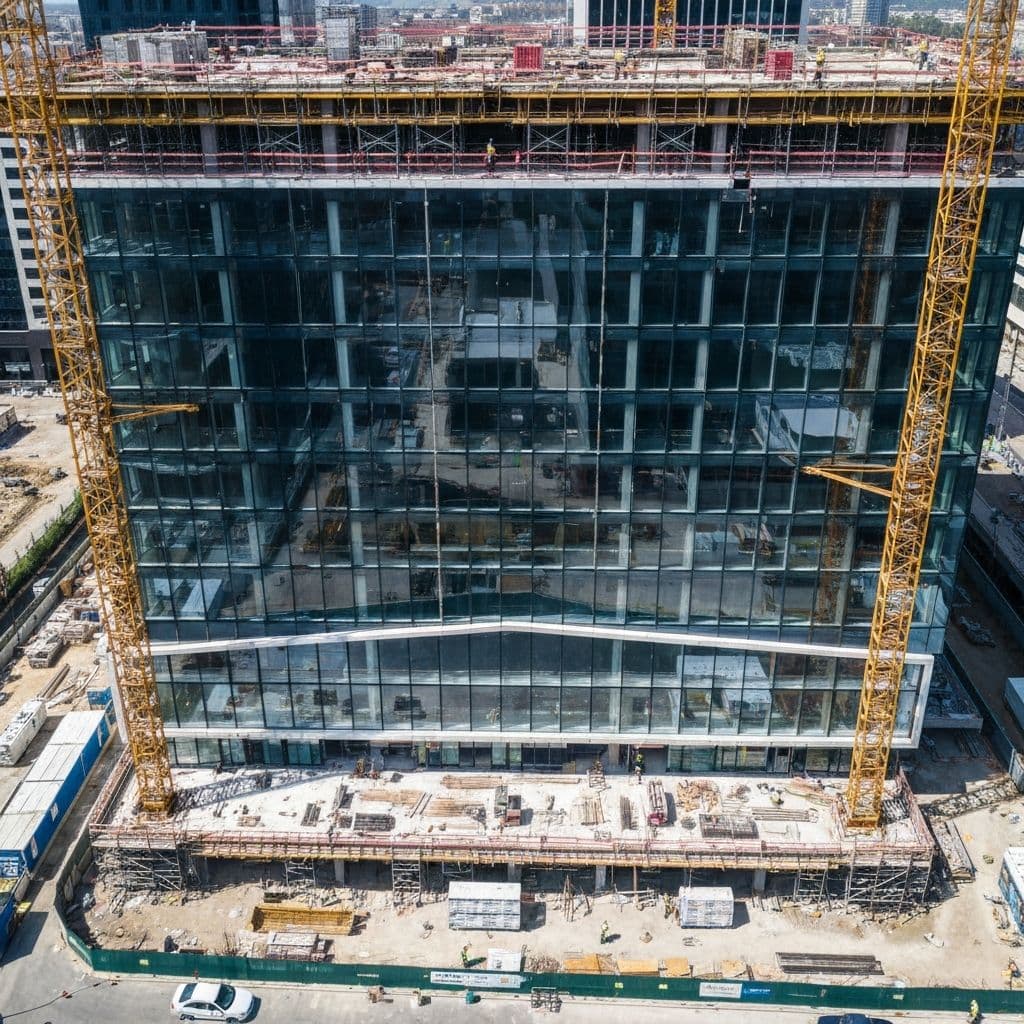
During construction, the owner's representative monitors progress, reviews payment applications, evaluates change order requests, and ensures quality standards are maintained. They serve as the owner's primary point of contact with the construction team and translate technical construction issues into clear information for institutional leadership.
Perhaps most importantly, the owner's representative manages contract administration and risk. When disputes arise — and they inevitably do on complex projects — the owner's representative ensures that the owner's contractual rights are protected and that resolution strategies serve the owner's long-term interests, not just short-term expedience.
Closeout and Transition
The final phase of a project is often the most neglected, yet it directly affects the owner's ability to operate the completed facility. The owner's representative manages punch list completion, systems commissioning, warranty documentation, and the transition from construction to operations.
For institutional owners, this phase also includes staff training, operational procedure development, and the resolution of any outstanding contractual matters. A project is not truly complete until the owner can operate the facility as intended.
How Owner Representation Differs from Construction Management
Construction management is focused on the execution of construction work — coordinating trades, managing schedules, controlling costs during the build phase. It is an essential service, but it is not the same as owner representation.
Owner representation encompasses the full project lifecycle, from initial planning through occupancy. It is strategic as well as tactical. A construction manager asks, "How do we build this efficiently?" An owner's representative asks, "Should we be building this at all, and if so, is this the right way to do it?"
The distinction matters most during the planning and design phases, when decisions have the largest cost and schedule impact. By the time construction begins, many of the most consequential choices have already been made. Owner representation ensures those early choices are informed by the owner's interests, not just the design team's preferences or the contractor's capabilities.
When Organizations Need Owner Representation
Not every project requires dedicated owner representation. For straightforward projects with experienced internal staff, the overhead may not be justified. But for complex institutional projects — particularly those involving:
- Budgets exceeding $10M
- Multiple funding sources with different requirements
- Historic or culturally significant facilities
- Active operations that must continue during construction
- Complex stakeholder environments with boards, donors, or public oversight
— the investment in experienced owner representation consistently pays for itself through avoided cost overruns, schedule delays, and quality failures.
Our work on the Museum of the Bible illustrates this principle. A project of that scale and complexity — involving historic preservation, advanced exhibition technology, and aggressive schedule requirements — demanded dedicated owner-side leadership throughout delivery.
The Return on Investment
Institutional leaders sometimes view owner representation as an added cost layered on top of an already expensive project. In reality, effective owner representation reduces total project cost by catching scope creep early, negotiating better contract terms, managing change orders rigorously, and preventing the rework that results from inadequate coordination.
Industry data consistently shows that projects with dedicated owner representation experience fewer cost overruns, shorter schedules, and fewer disputes than comparable projects without it. The typical fee for owner representation — ranging from 2% to 5% of construction cost depending on project complexity — is a fraction of the savings it enables.
Conclusion
Owner representation is not a luxury service for organizations with unlimited budgets. It is a practical, proven approach to protecting institutional investments in complex capital projects. For corporate, civic, and cultural organizations undertaking significant construction, the question is not whether you can afford owner representation — it is whether you can afford to proceed without it.
If your organization is considering a major capital project, contact our team to discuss how dedicated owner-side leadership can protect your investment and improve your outcomes.