
A video board replacement usually begins as a procurement conversation. A manufacturer quotes a display, the number is large but comprehensible, and the athletic department or venue operator builds a budget around it.
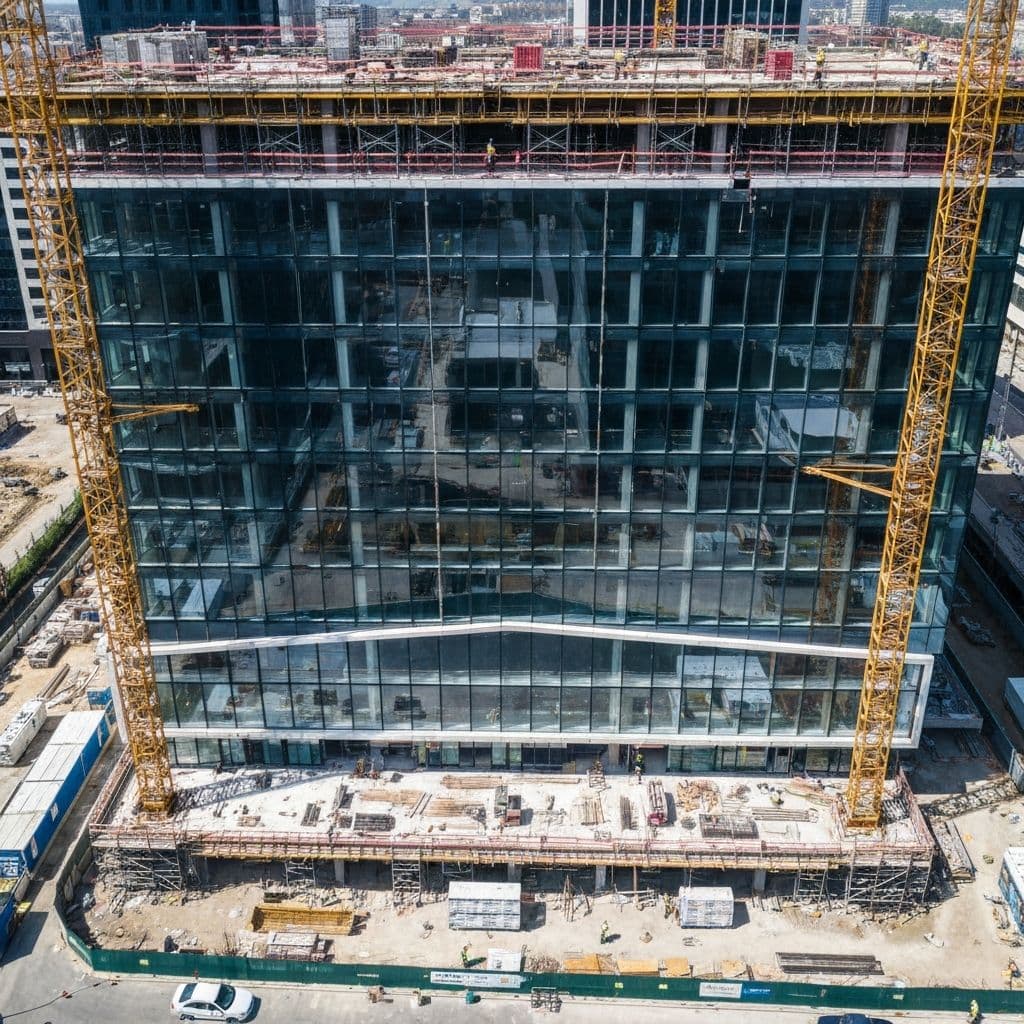
Then the engineering starts. The new board is larger and heavier than the one it replaces, so the supporting structure needs analysis and probably reinforcement. It draws more power, so the electrical service and distribution need review. It carries more data, so the control room, cabling pathways, and network need upgrading. And all of it has to happen in the window between one season and the next.
The display was the purchase. Everything else is a construction project, and it is frequently the larger half.
What Sits Behind the Screen
An owner scoping this work should expect scope in at least five areas beyond the display itself:
- Structure. New displays are commonly larger and heavier. The existing support steel, its connections, and in some cases the foundation require engineering review. Wind loading on a larger surface is a real design condition, not a formality.
- Electrical. Service capacity, distribution, conduit, and grounding. Larger boards and the processing behind them can exceed what the original installation provided.
- Data and control. Signal pathways, the control room, processing equipment, and the network. Modern systems are a broadcast facility, not a sign.
- Integration. The board rarely operates alone. Sound, ribbon boards, auxiliary displays, timing systems, and broadcast feeds all have to work together on the first event.
- Demolition and access. Removing the old board can require crane access, temporary closures, and protection of the seating bowl and playing surface below.
Any of these can exceed the display cost. All of them are easy to leave out of an early budget built from a manufacturer's quote.
The Schedule Is Not Negotiable
Most venue projects have some schedule flexibility. This one usually does not. The first home event is fixed, publicly known, and commercially significant, and a board that is not commissioned by then is visible to everyone in the building.
That makes the offseason window the governing constraint, and it makes long-lead procurement the primary schedule risk. Display manufacturing lead times, structural steel, and electrical gear all need to be ordered against a date that cannot move. An owner who signs the display contract late and expects the structural work to compress is planning for a failure they will not be able to hide.
Commissioning Is Not the Install
The most common late-stage problem is treating a working display as a finished project. A board that powers on is not a board that has been tested at full brightness, across all content types, with live inputs, under game-day conditions, with the sound system and the broadcast feed running simultaneously.
Independent verification before acceptance matters here for the same reason it matters on building systems: the party that installed the equipment should not be the only party confirming it works. Commissioning as an independent step is the difference between discovering an integration problem in a rehearsal and discovering it in front of a full house.
Who Owns the Integration Risk
The integration gap between vendors is where these projects most often go wrong. The display manufacturer, the electrical contractor, the structural contractor, the control system integrator, and the broadcast consultant each have a defensible scope, and the failure usually happens between them.
Two things reduce this risk, and both are owner decisions made before award:
Assign integration explicitly. Someone must be contractually responsible for the systems working together, not merely for their own equipment functioning. If that responsibility is not assigned, it defaults to the owner.
Sequence the testing. Build a testing and commissioning schedule with real dates before the first piece of equipment arrives, and make it a contract deliverable. Testing that is scheduled only after installation completes will be compressed into whatever time is left.
Budget the Whole Thing at the Start
The practical recommendation is simple: before approving a video board budget, require a scope that includes structure, power, data, integration, demolition, commissioning, and contingency — priced by someone with no interest in the display sale.
Boards get approved on the display number and overrun on everything else. An owner who prices the whole project at the outset is not spending more; they are finding out earlier. Independent cost validation at that stage is inexpensive relative to what it prevents.